Week 1
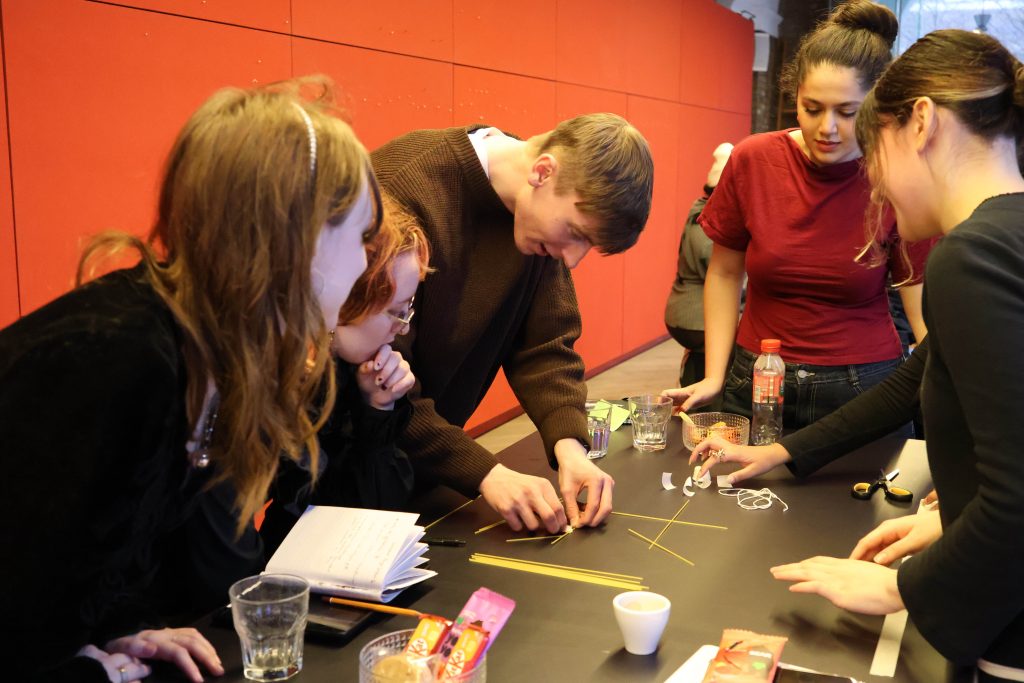
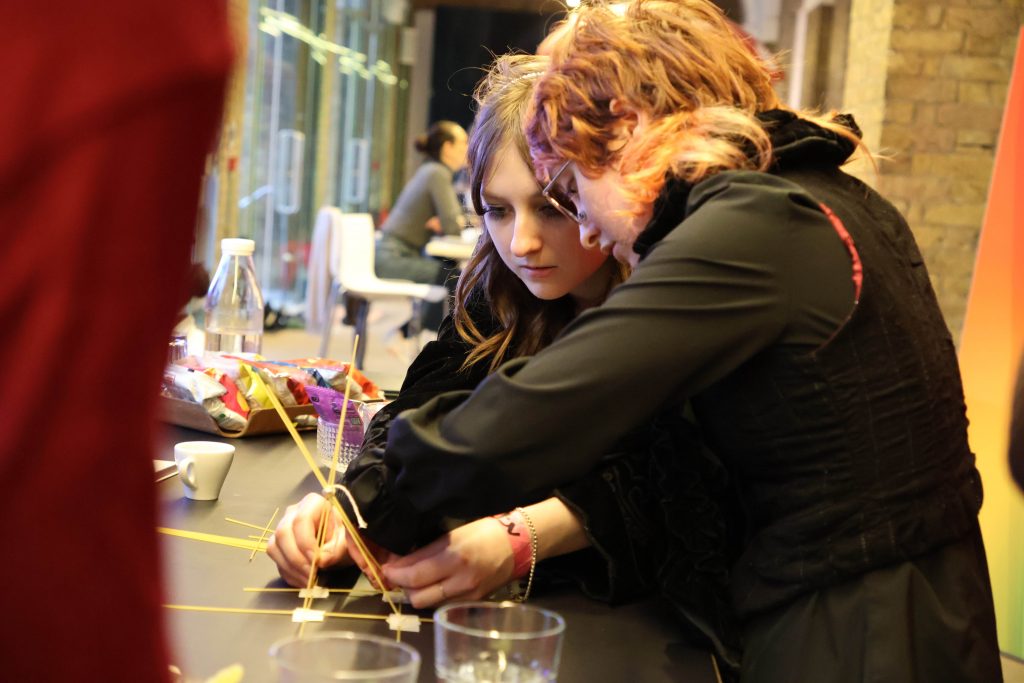
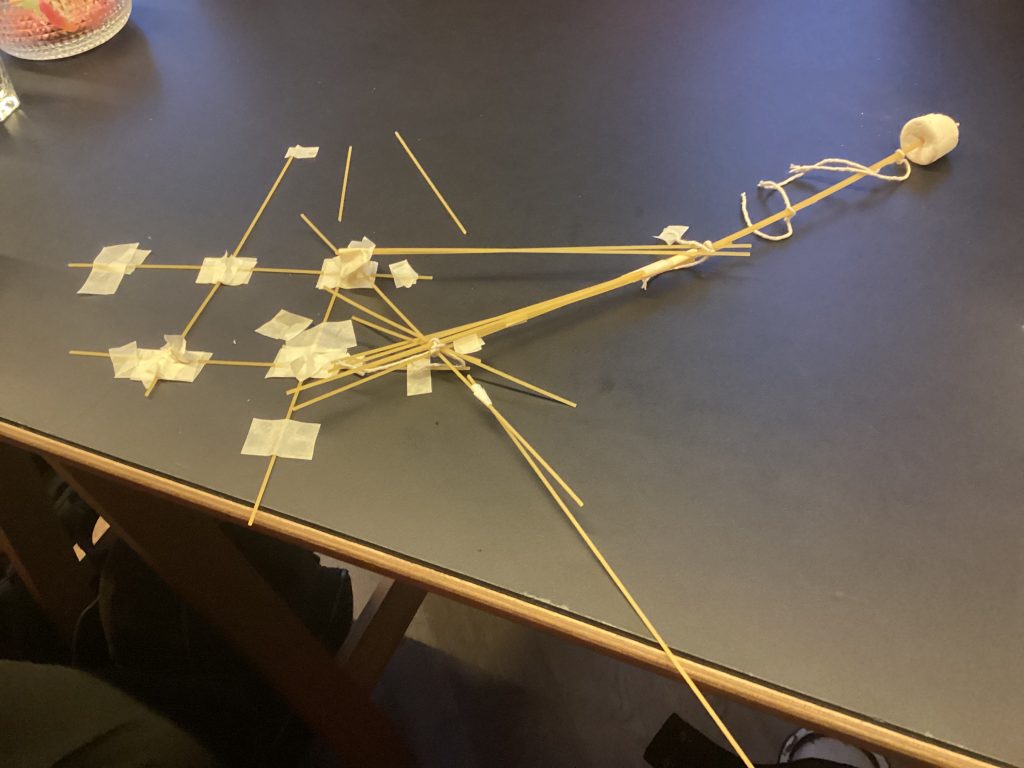
During this first session we were sorted into our teams and worked together in the ice breaking activity to use the provided materials (pasta, string, tape) to keep the marshmallow off the table. Ultimately our structure fell apart as it wasn’t secure enough. While we only had 5-10 minutes we should have checked the structural integrity of our tower throughout our experiments instead of adding the marshmallow on last. This was a fun challenge and I enjoyed being introduced to my team in this way.
During this session we was also introduced to our V3 Mentor: Tim Jones, who would be providing support to us throughout the brief.
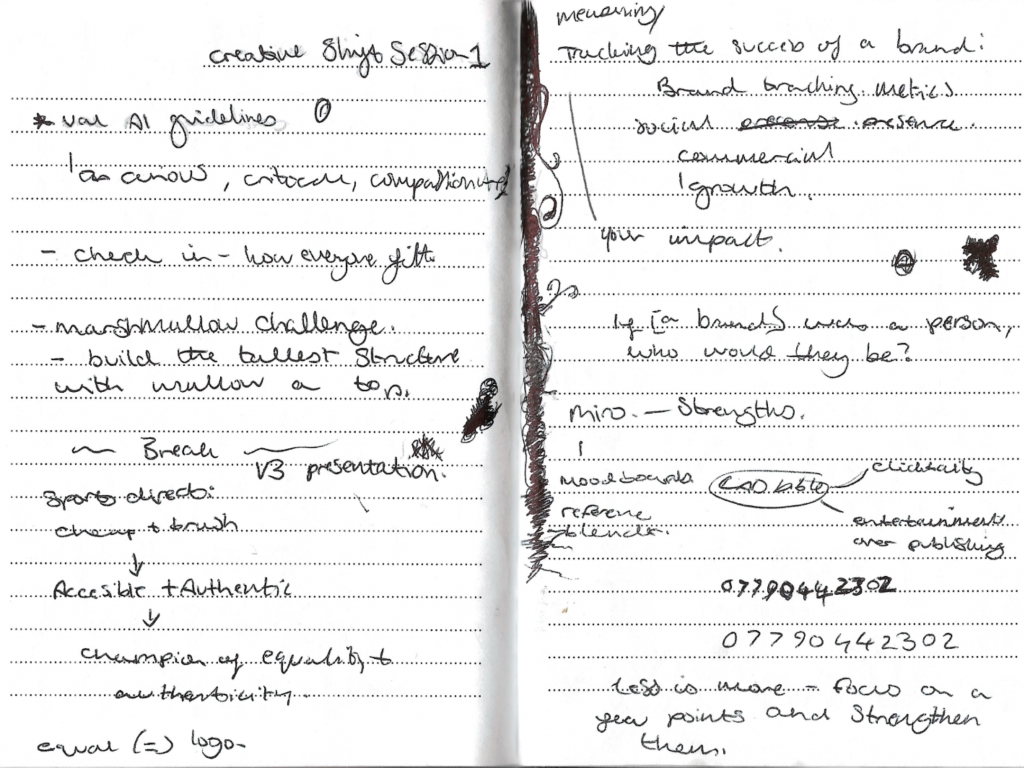
Here are the notes I took during the rest of the session:
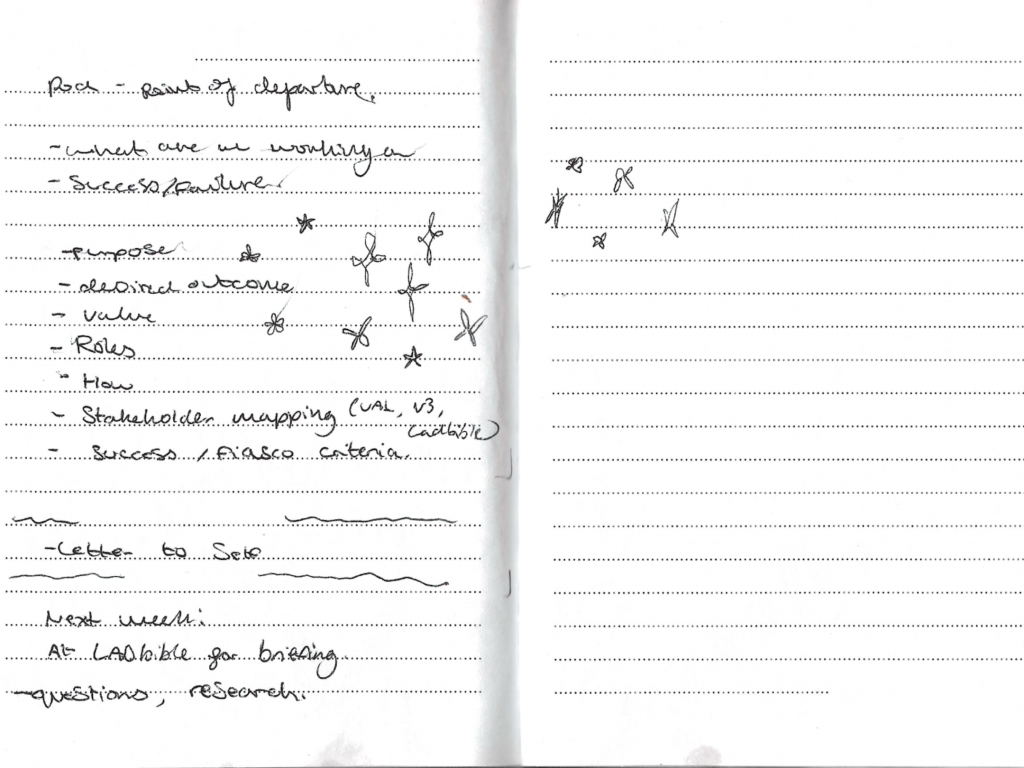
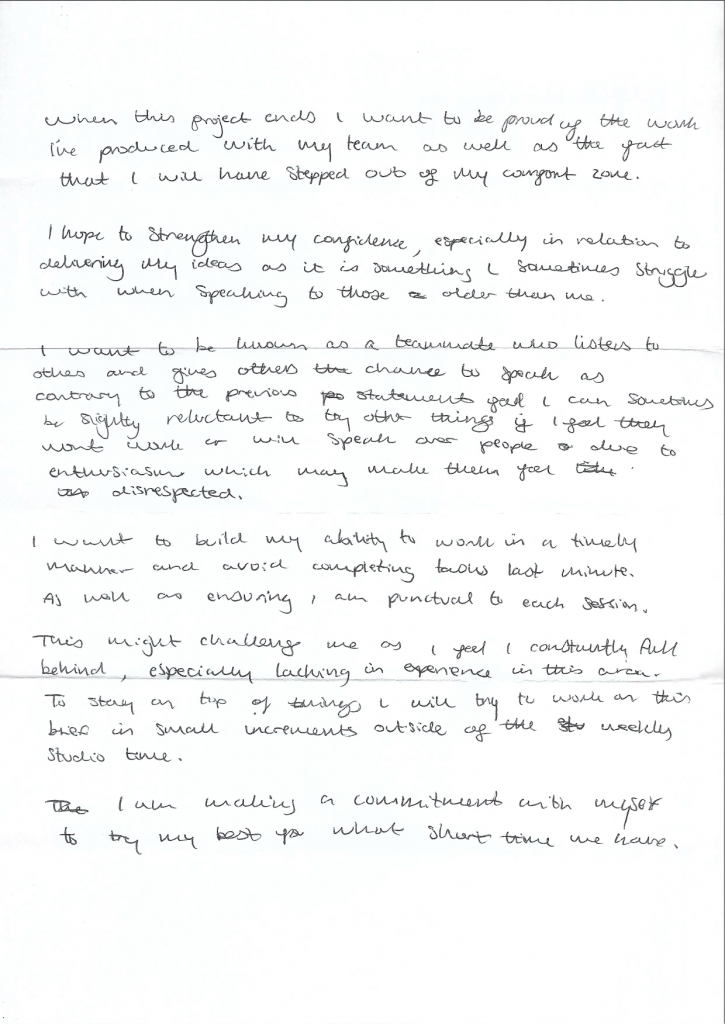
At the end we wrote a letter to ourselves, outlining what we hoped to achieve and different areas we would work on. This made me reflect on this things and think about what I wanted to get out of the brief.
Week 2- Visit to LadBible
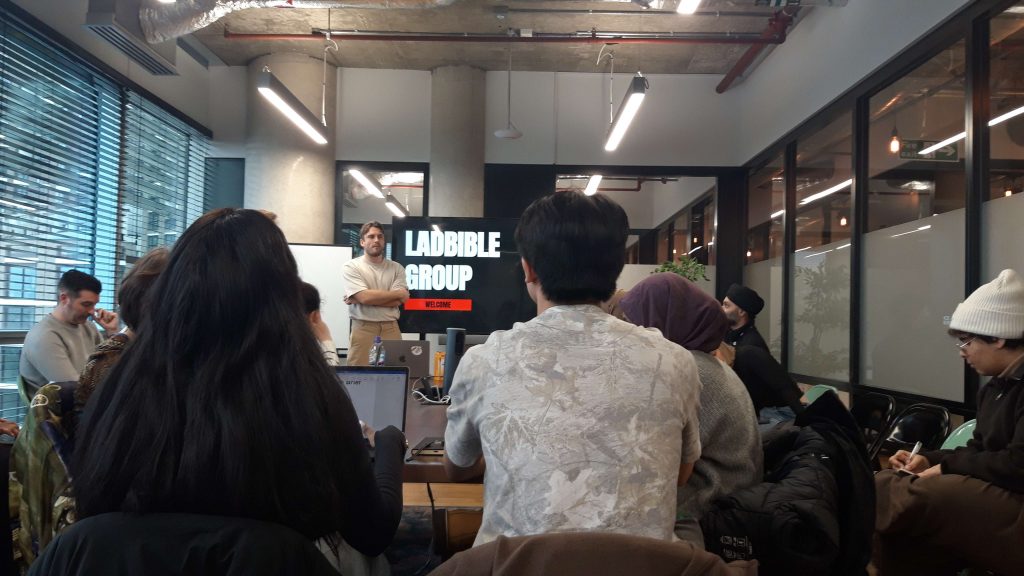
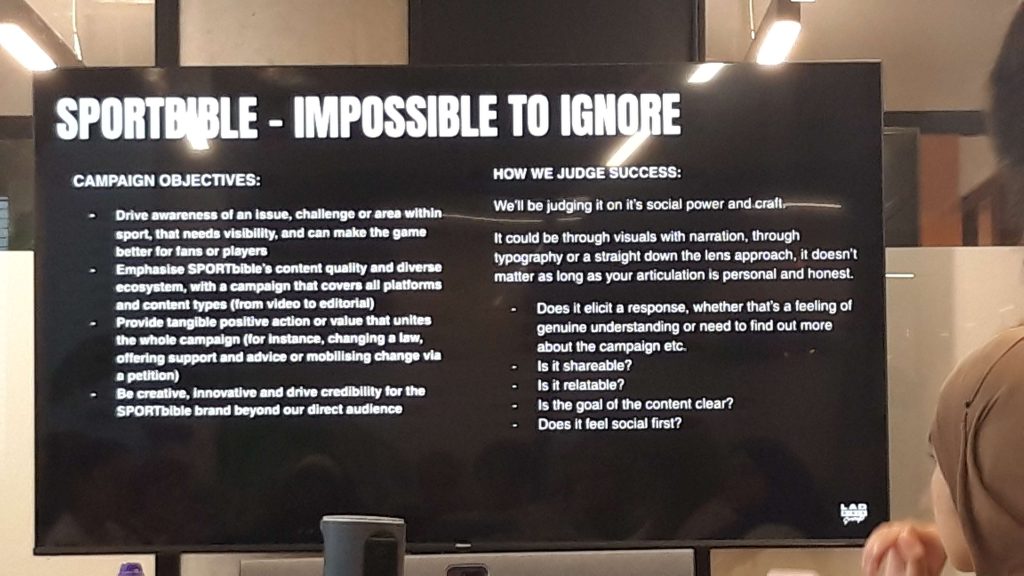
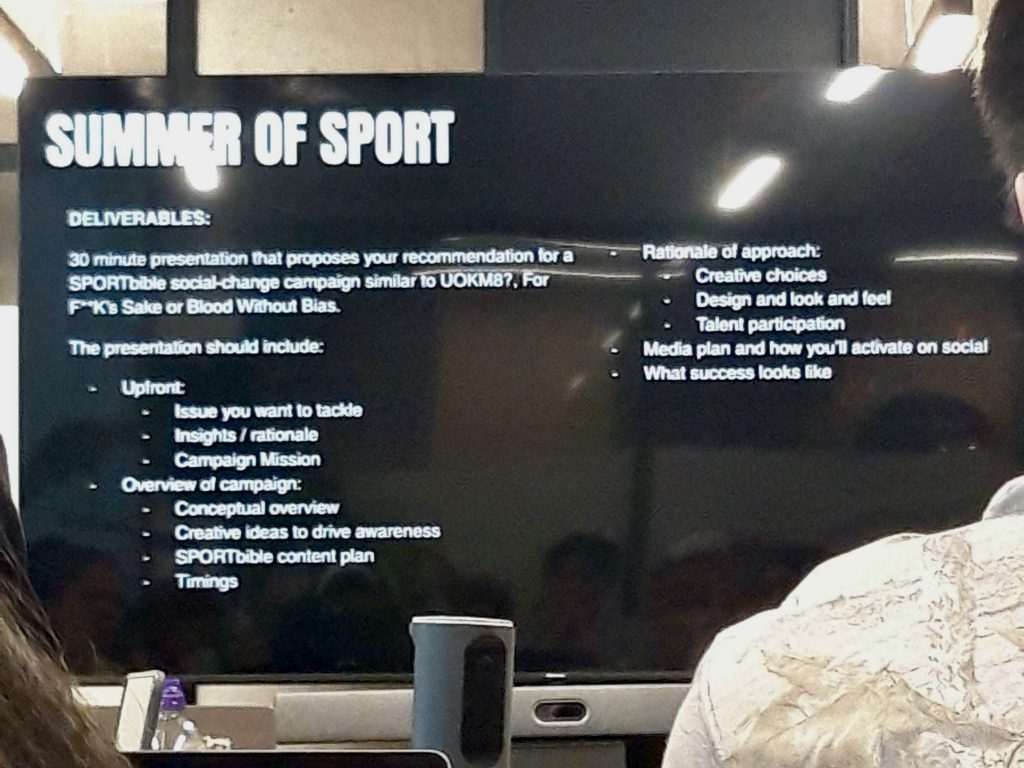
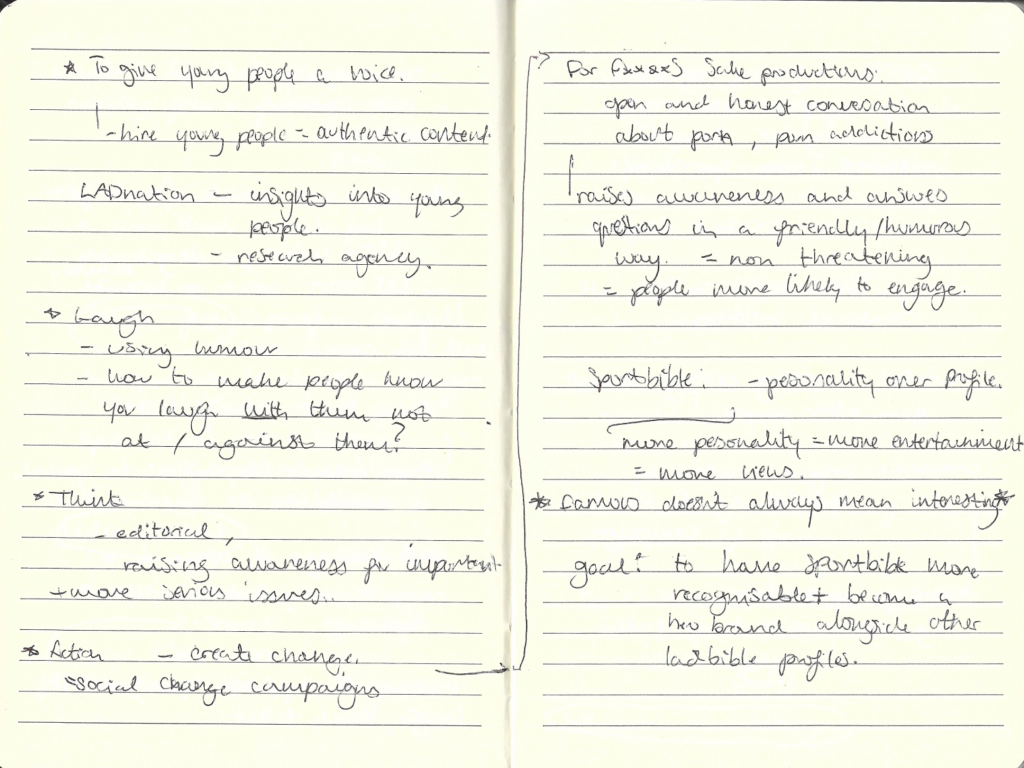
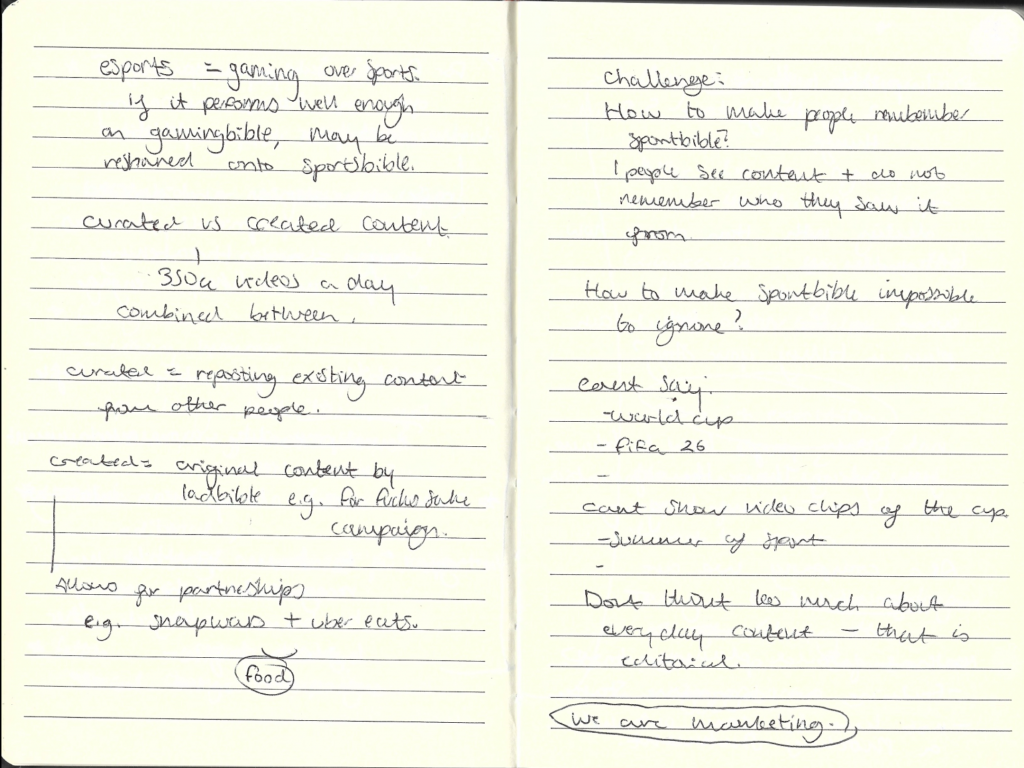
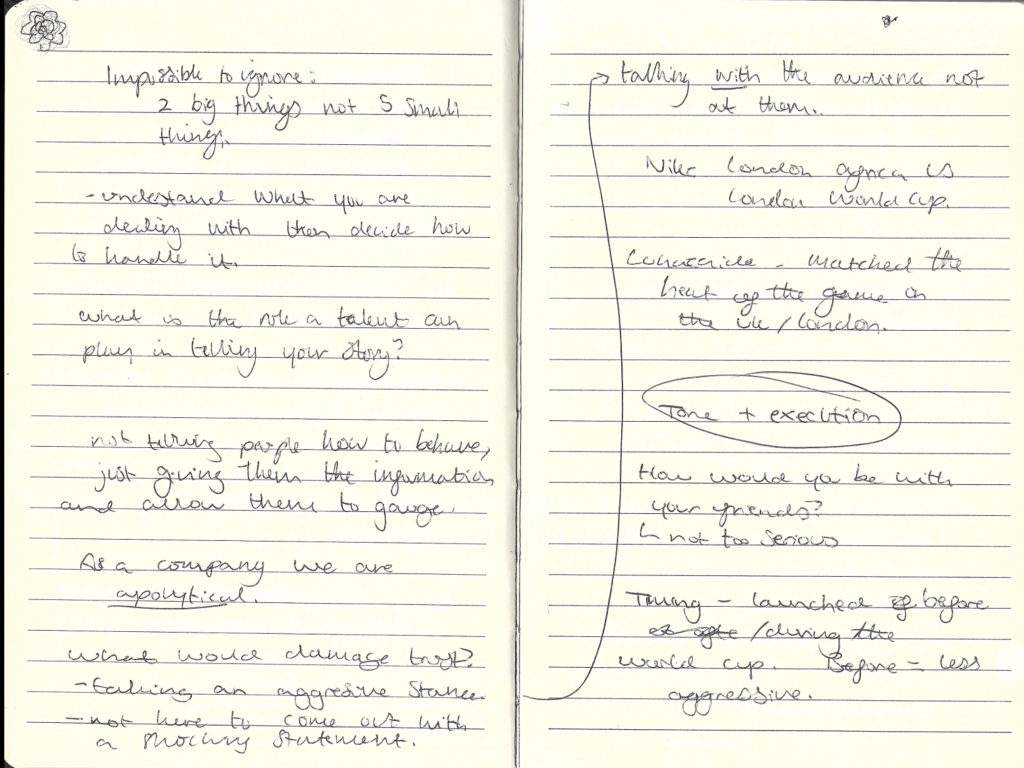
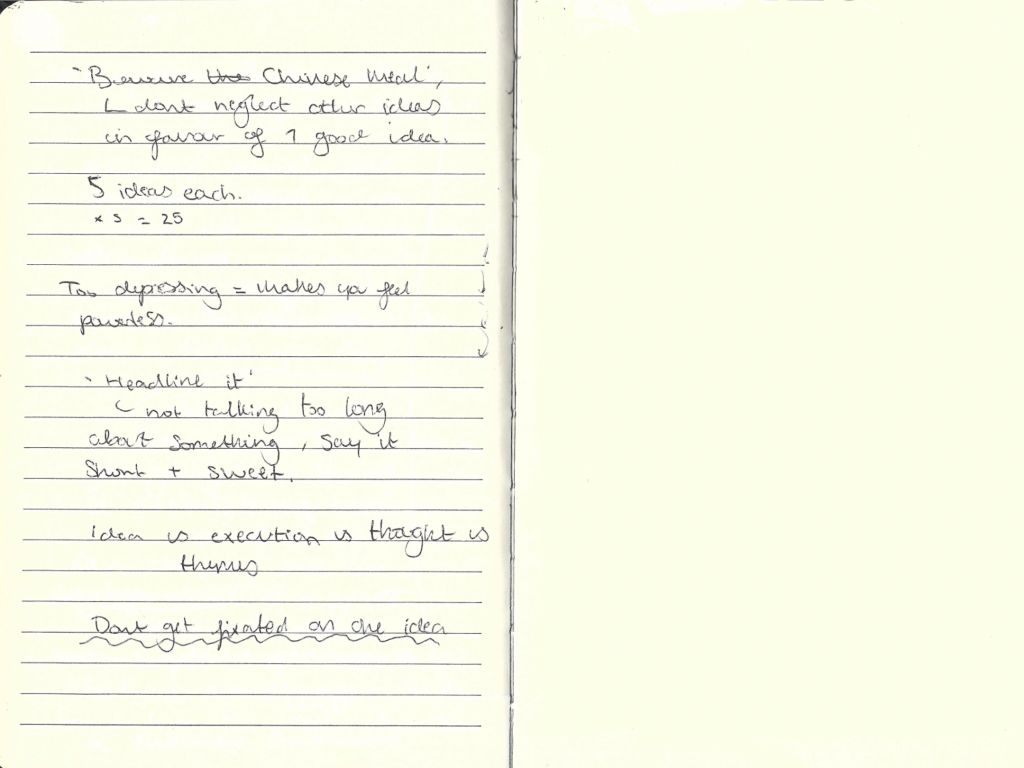
In this session we got to learn what our brief would be by visiting the LadBible office and receiving it from them directly. In this session we were able to begin brainstorming ideas in our team and choose which of the briefs we wanted to tackle. My team was most drawn towards addressing a social issue. An idea I really liked from my teammate was the connection between football and domestic violence however we all struggled to see how it could be addressed in a way that would be true to the brand and not disrespectful so we ultimately shelved it.
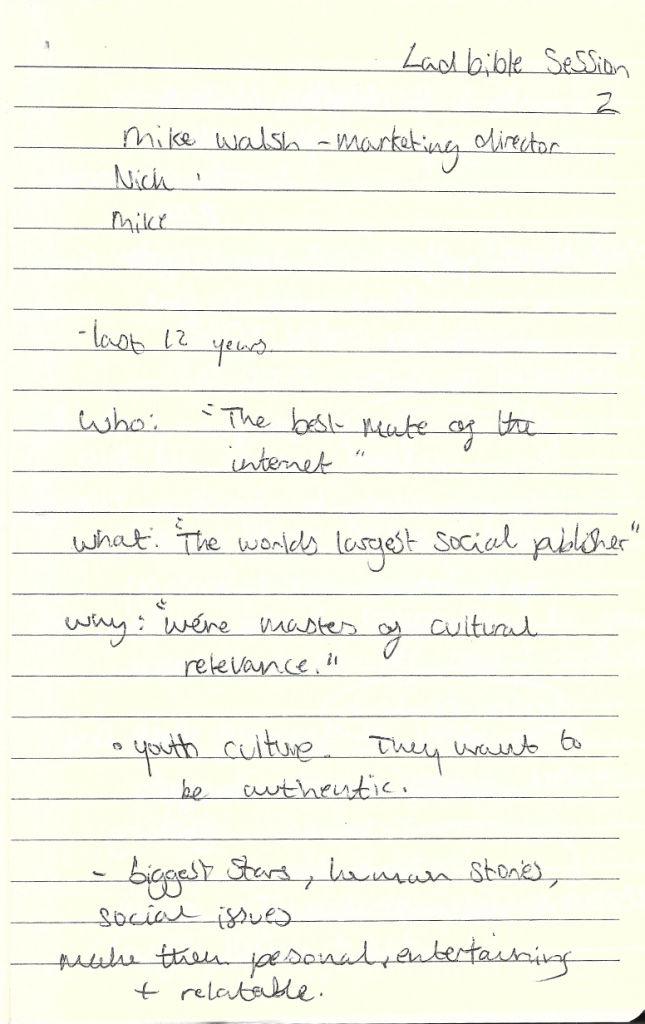
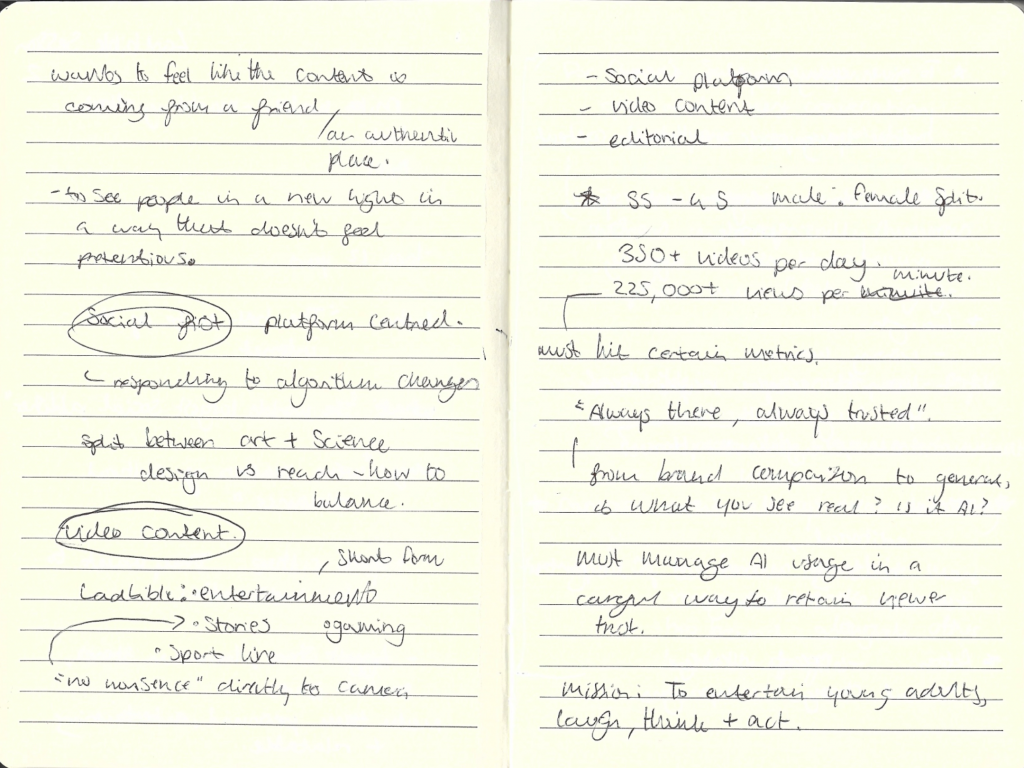
Session notes:
Working on the brief
Weeks 3-7
Week 3 and onwards we worked together in our teams to develop our ideas for the brief. Our first session back had lots of brainstorming before our mentor came over to help us organise our thoughts.

Over the next couple of weeks we were purely focused on ideas generation as we were told not to get stuck on just one idea. One idea I came into the session with was the observation that pride and the World Cup overlapped and as a team discussed different ways they overlapped a little (kiss cams, body contact). Throughout this session we had to try to steer away from negative ideas. This was challenging due to how political sports can be and the current happenings in the world now. Speaking with our mentor helped to redirect us and keep us from straying too far away from the essence of the brief. Above all, our client sport Bible is an entertainment company so we didn’t want to forget that by being too serious with our focus. That’s what I liked about Pride as its’ very nature is quite upbeat and a celebration.
notes:
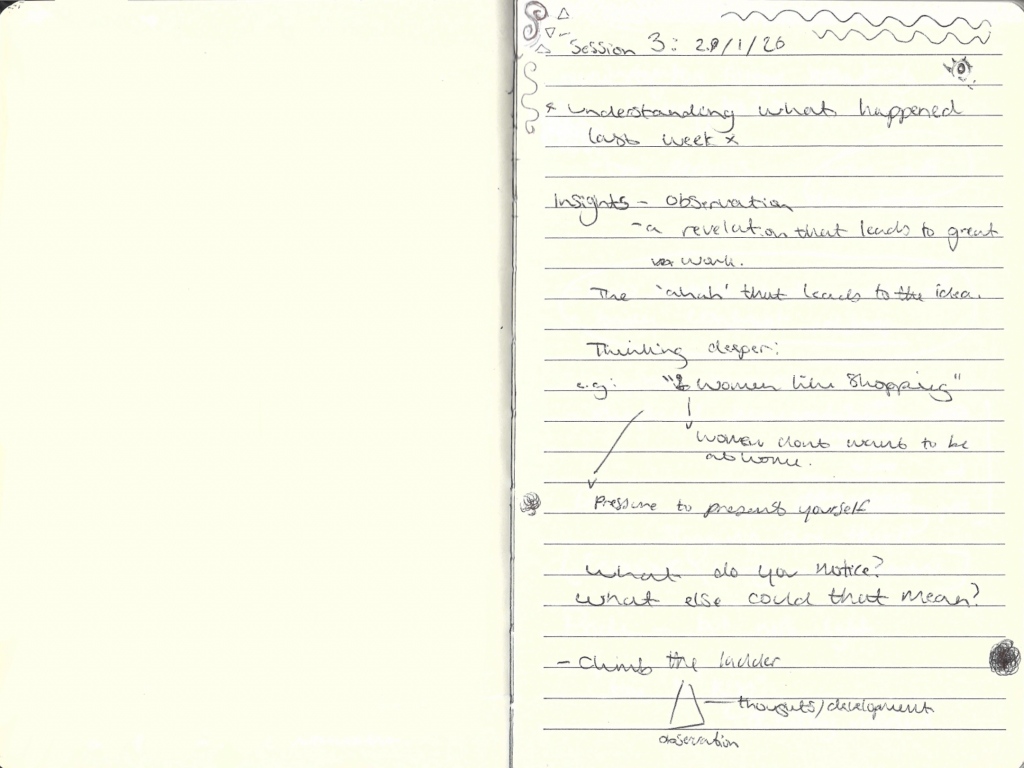
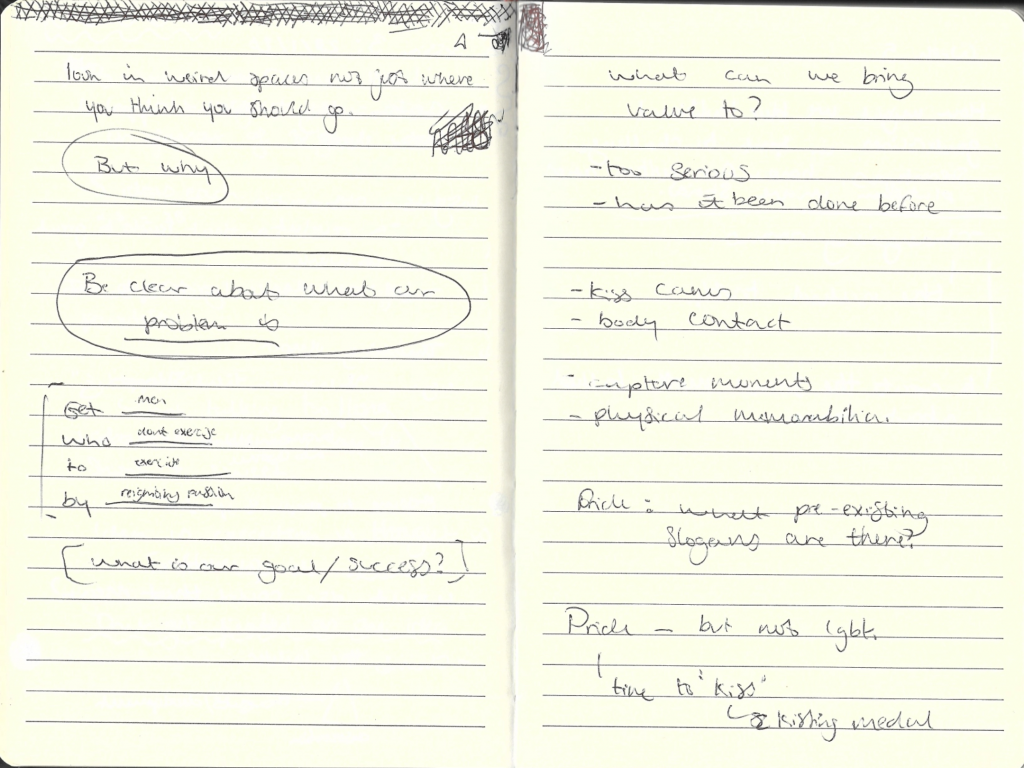
During our sessions we brainstormed as a team. Doing this on paper helped us to visualise how many ideas we had and what they were at a glance.

At the end of each session we set each other “homework” to do over the week. Initially this was just ideas generation but then changed to become more research oriented. Doing this research helped me to prepare for the next sessions as well as offer new talking points during our discussions.
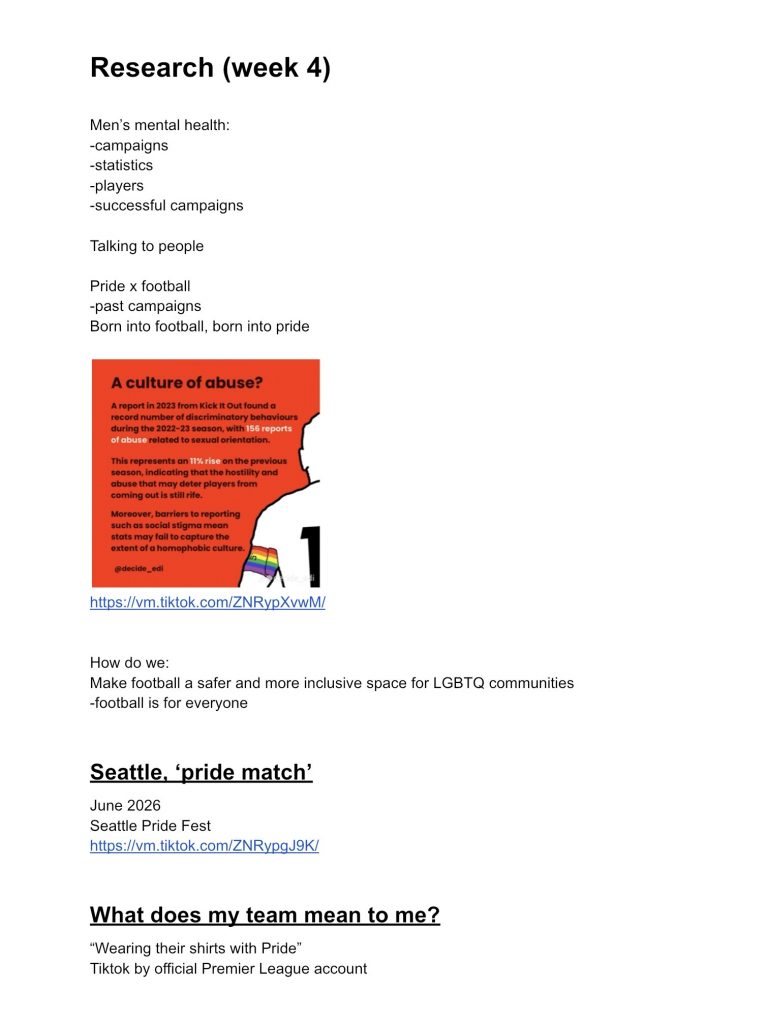
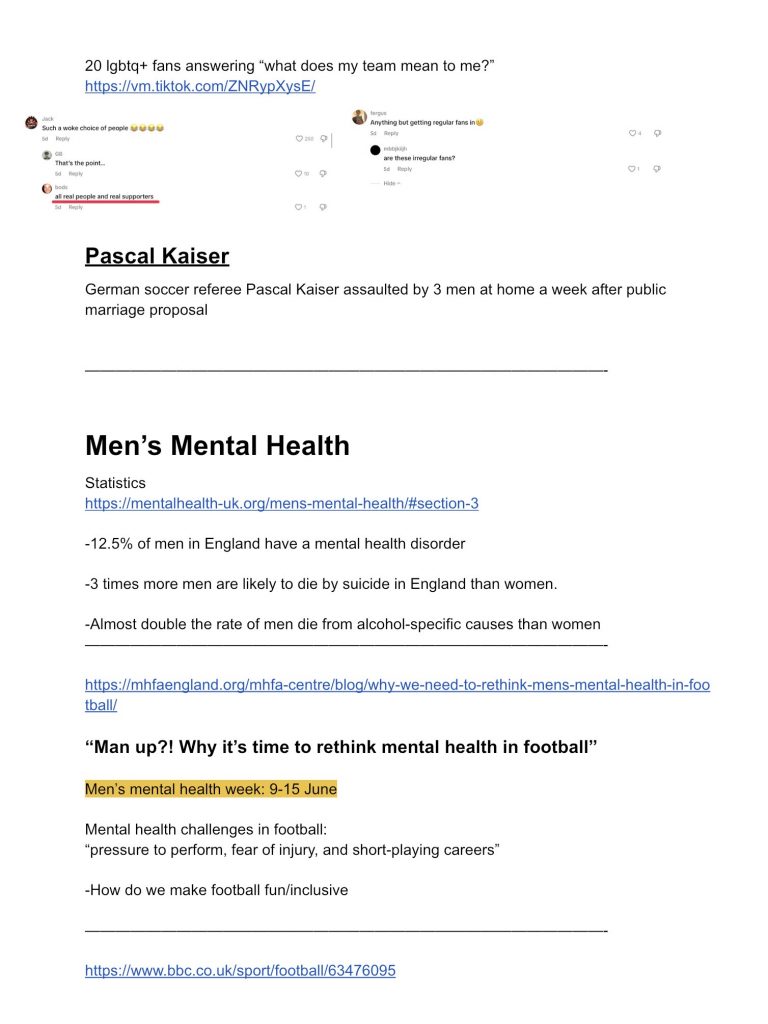
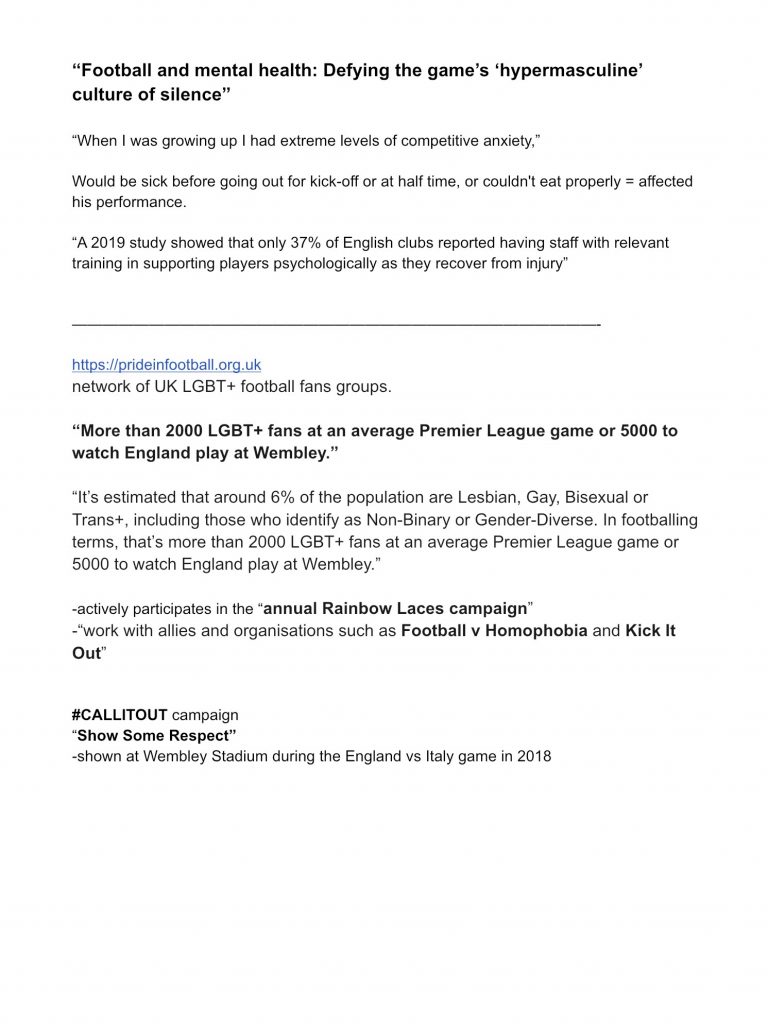
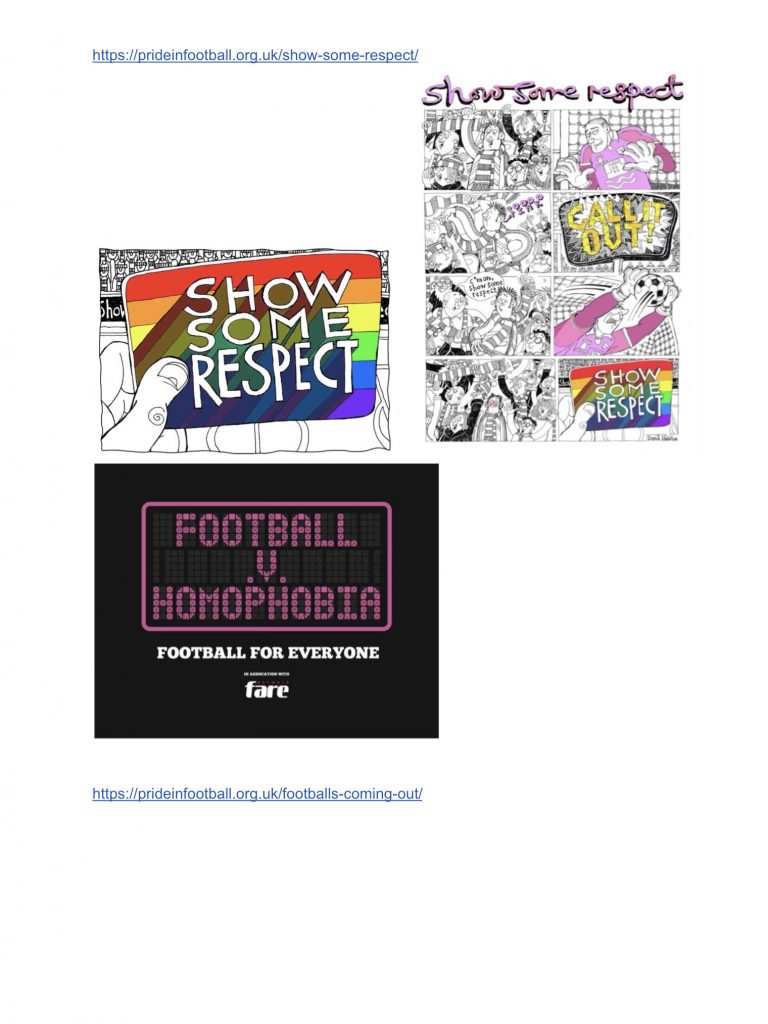
As the weeks progressed we became more detailed with our in session mind maps. This development helped indicate the progression we was making with our idea.
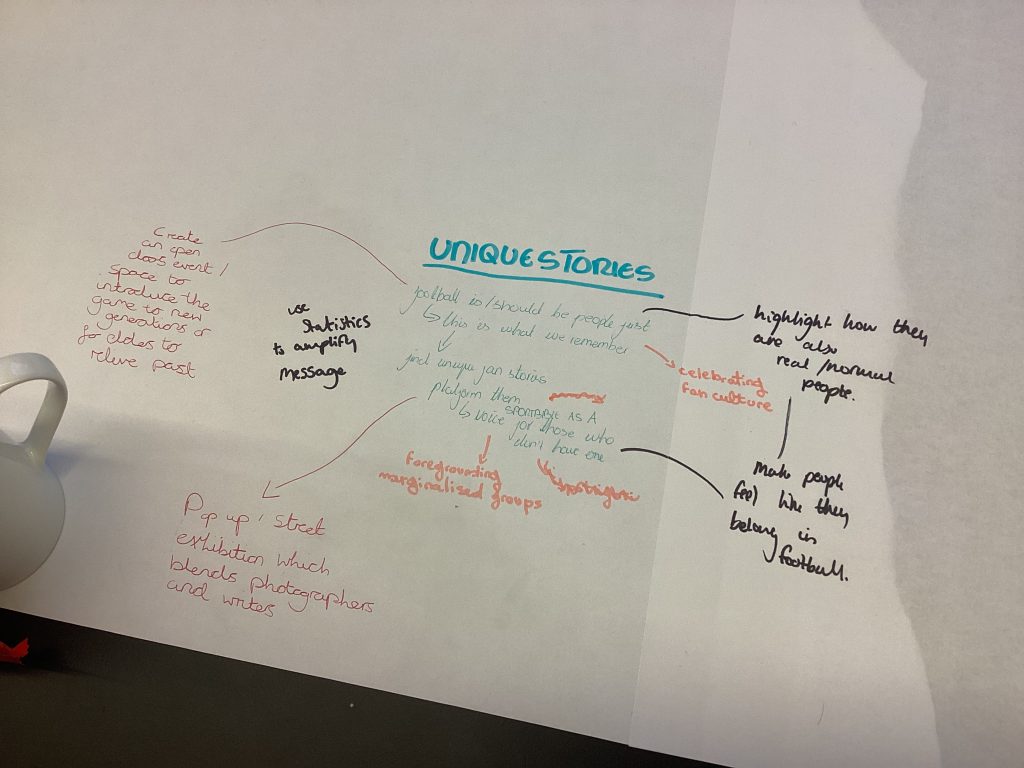
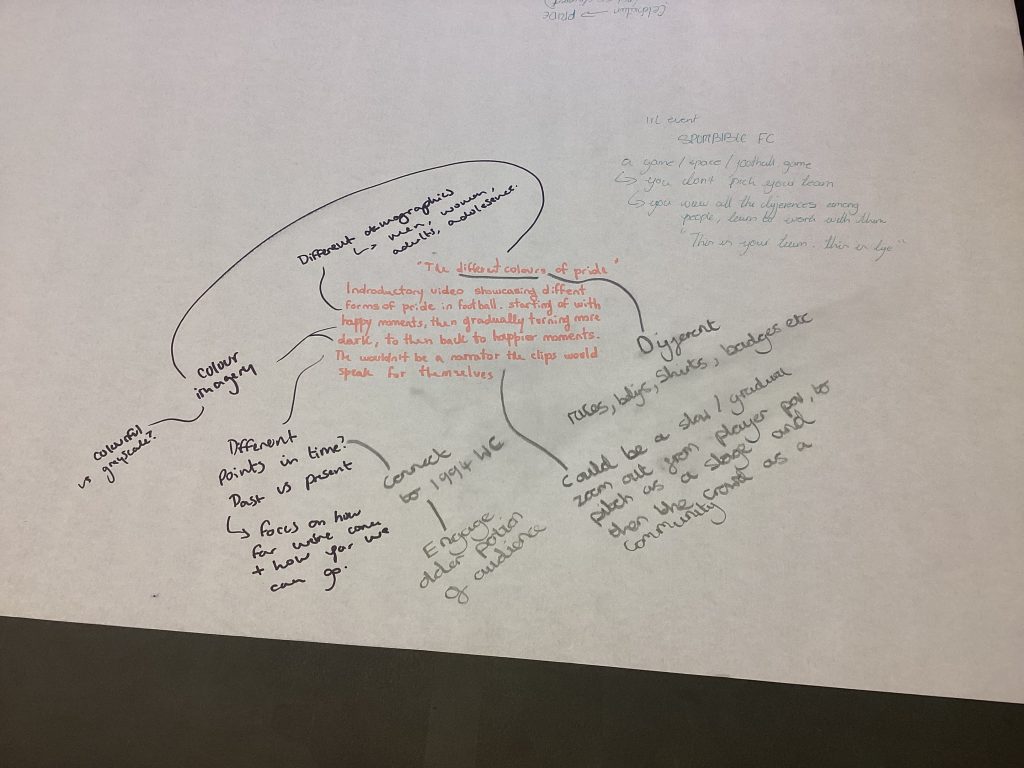
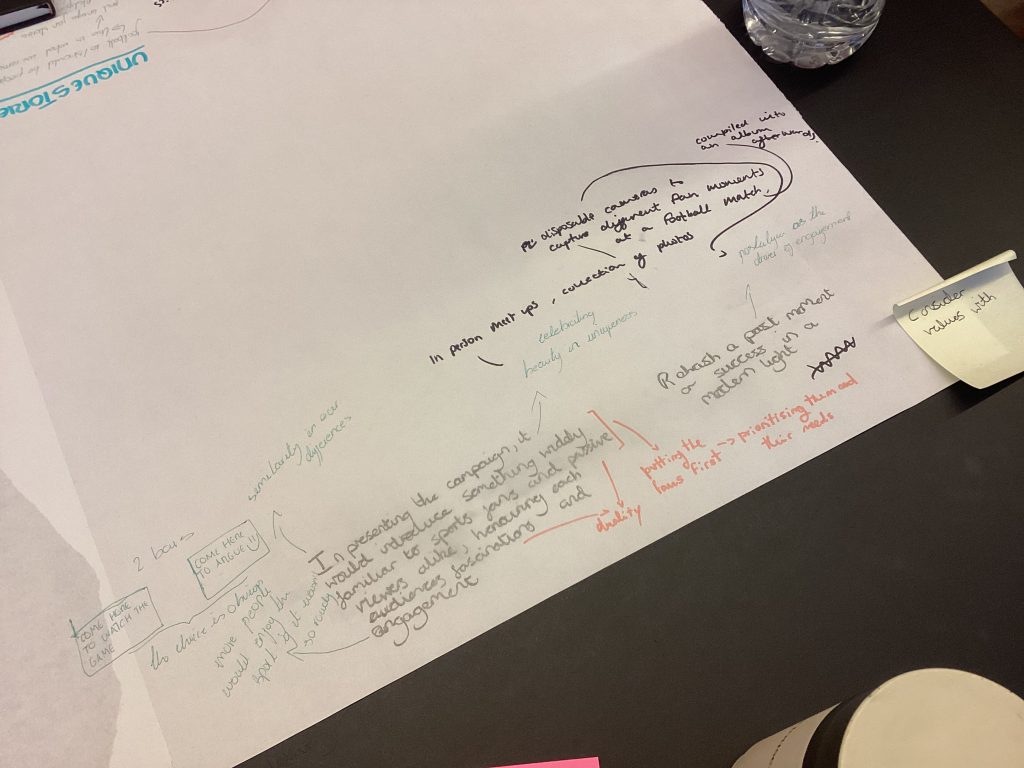
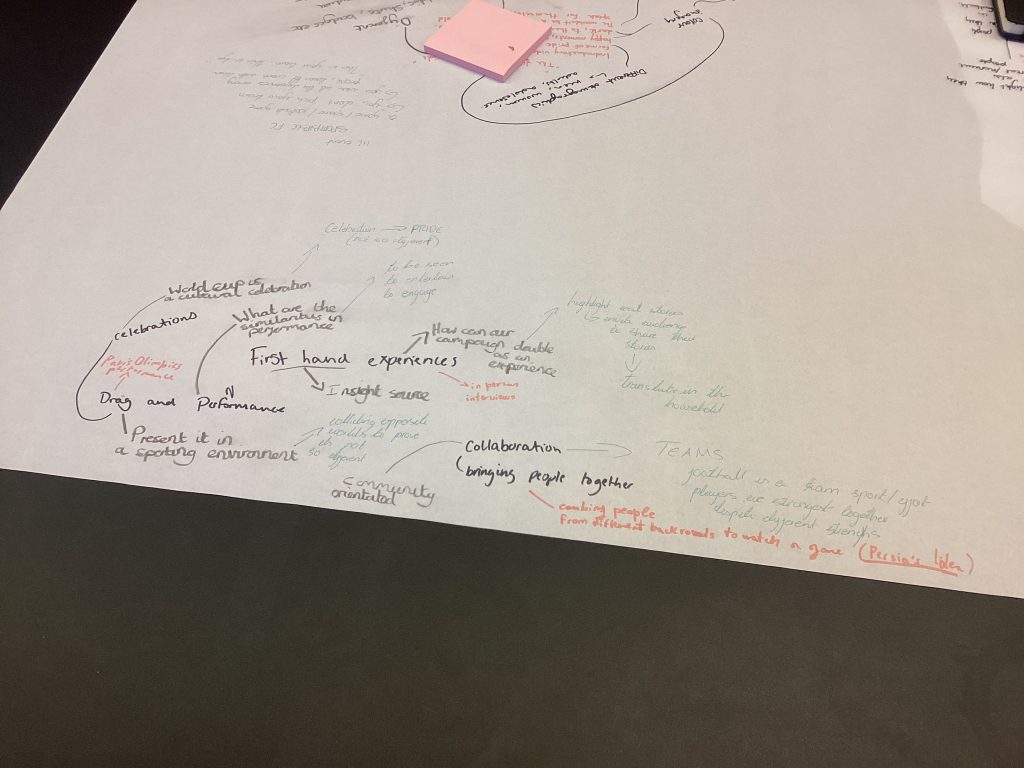
Mid way through these 5 weeks began to hone in on the idea of Pride and mapped it out alongside some of our other strong ideas to visualise the connections between each of them. Doing this made us realise how many overlaps there were between different ideas and how we could combine some of them.

Based on our previous ideas we were able to create a question we for us to answer then taking turns to write our different ideas out. Doing this helped us to finalise what we wanted to do before we began to pitch it informally.
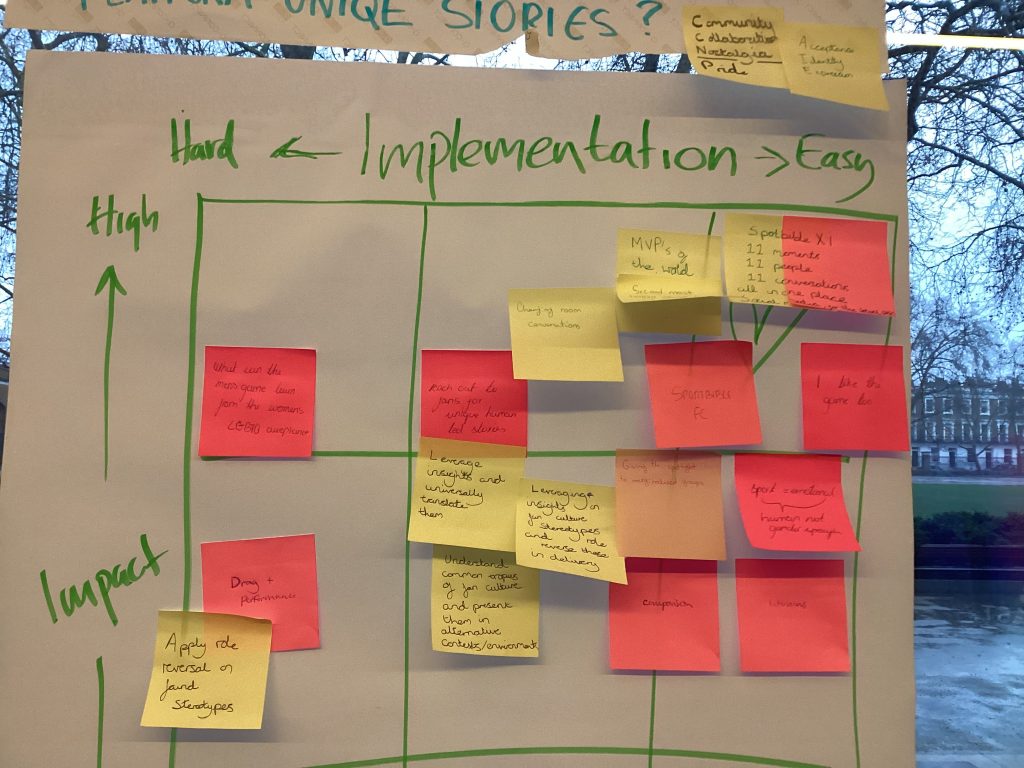
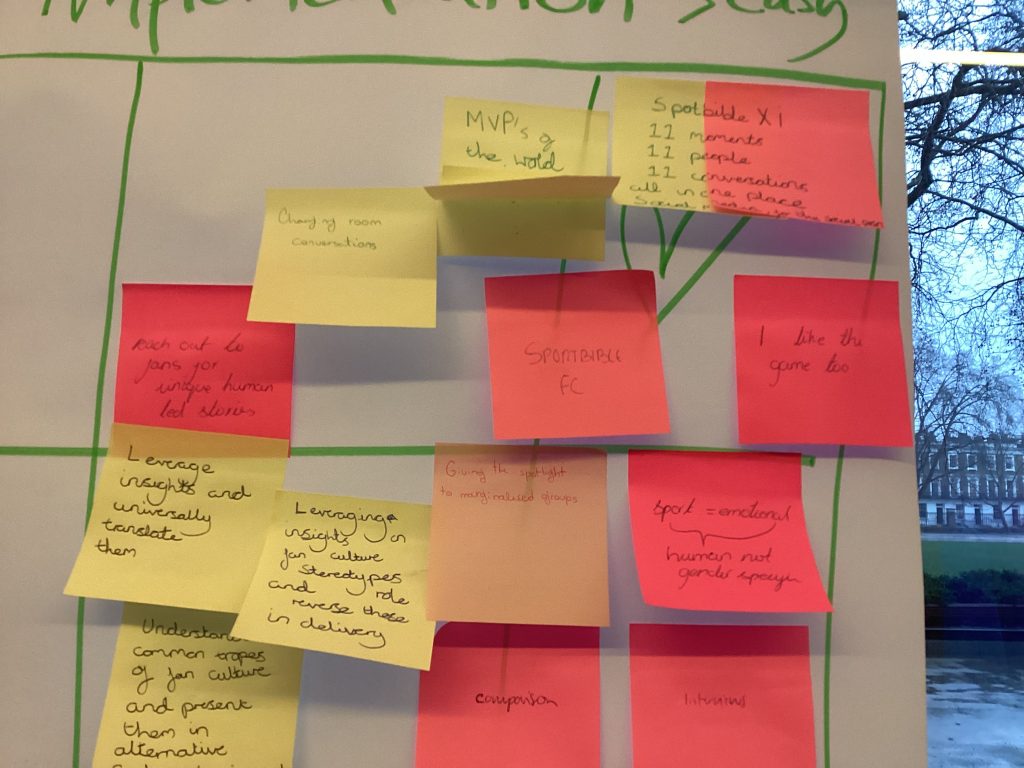

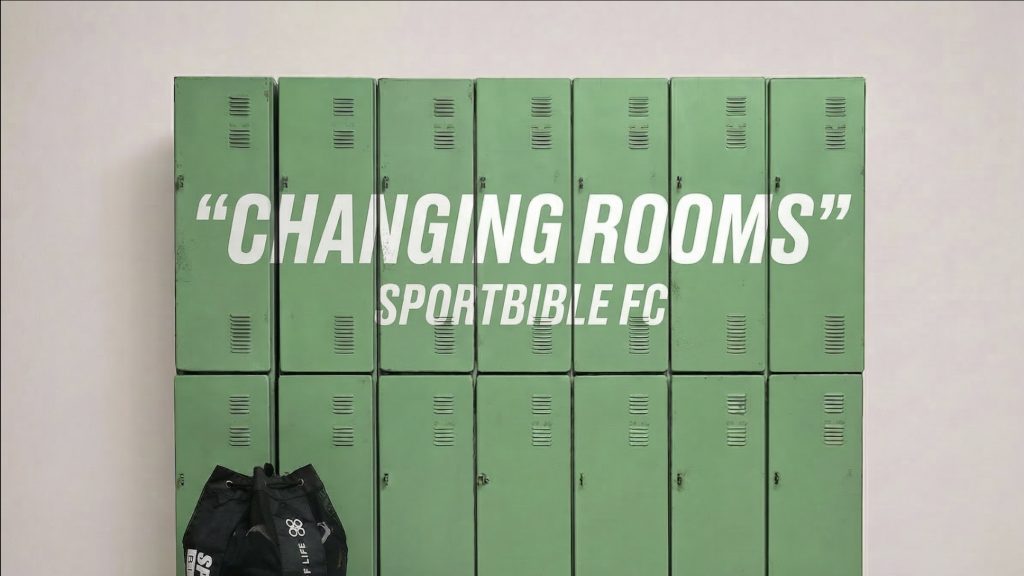
Our idea was called ‘changing rooms’, “because there’s room to change in sports”. Because we had such a variety of ideas we decided to create a space where we could confront each of them. Our concept was a discussion styled campaign, similar to previously done table discussion videos where people are able to talk through their different views of the same topic. We would be able to tie it back into sports by thinking about how different topics are related to it, such as anti black or LGBT sentiments often seen.
Pitching the Brief
Weeks 8-10
During the brief, we had 2 opportunities to practice our pitch in front of the rest of the group before pitching officially to the client. Doing this helped me to build my confidence with speaking in front of a sizeable group as public speaking is a weak point of mine.
In each of these sessions we received feedback from each of the V3 mentors, allowing for us to strengthen our pitch before the final delivery. We also had a more involved meeting with our mentor Tim, who helped us to implement the feedback. One of the things we struggled with was the presentation of our idea. To strengthen how we present it Tim recommended for us to plan what we were going to say and then build our slides around that, so using the papers that Tim drew up for us we revisited our slides, thinking critically about what we wanted if they were effective.
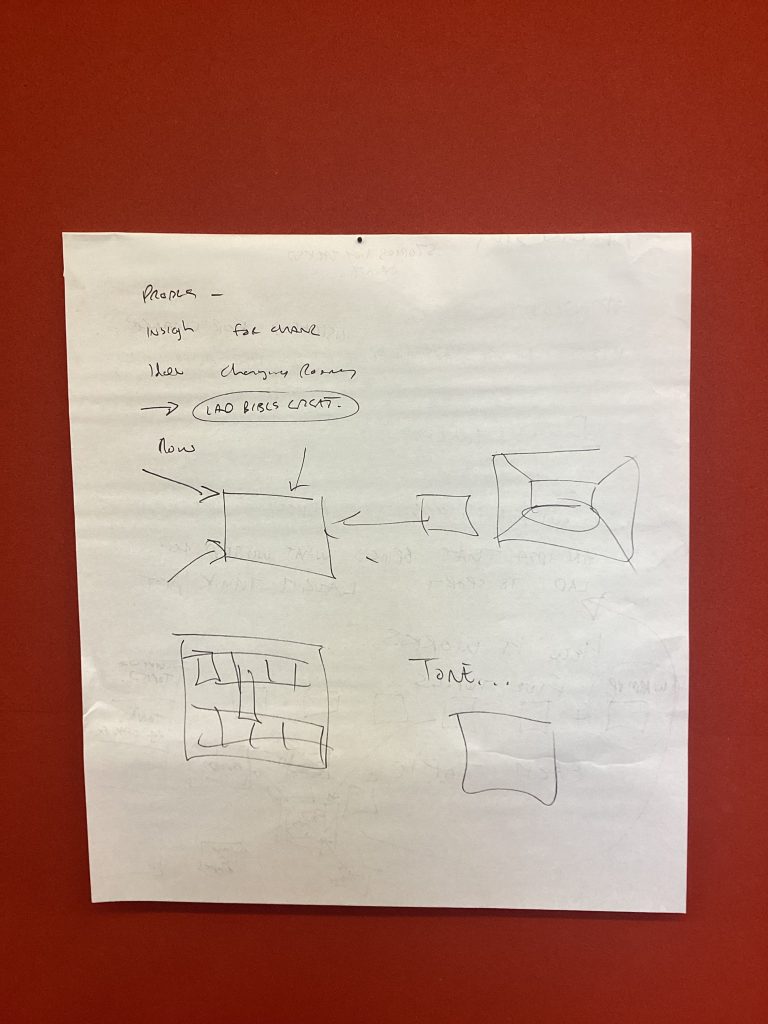
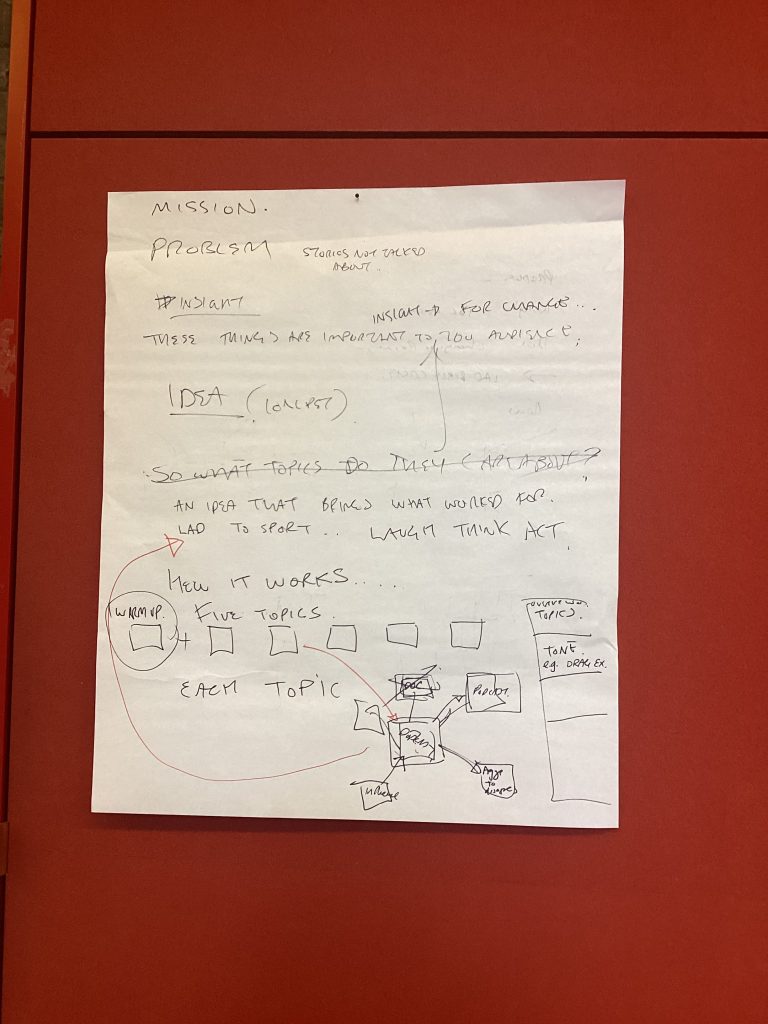
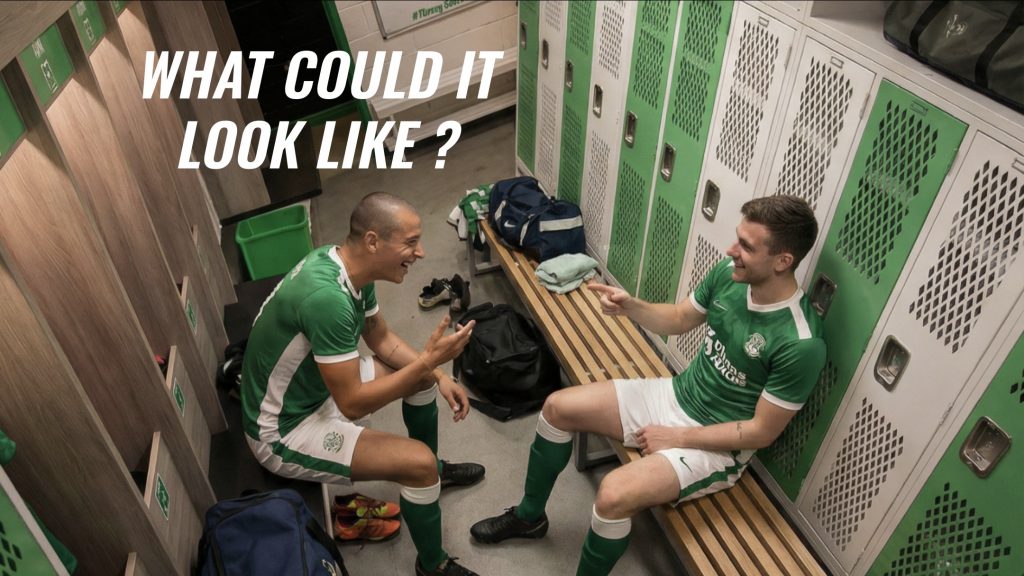
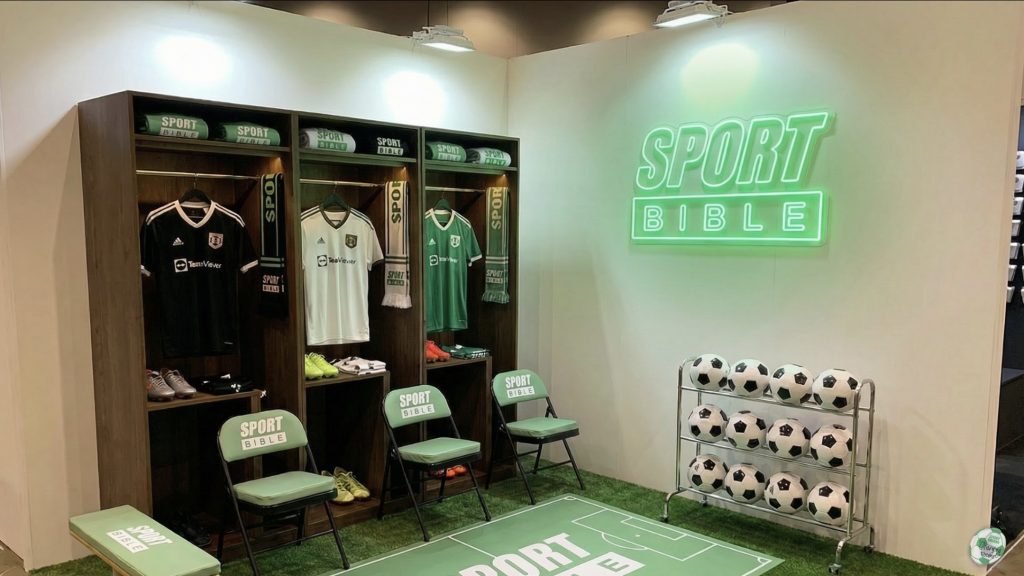
Using this feedback we redeveloped our slides’ visuals to make our idea easier to follow. During this, one of my teammates used Adobe’s AI to generate visuals (some which were based on my mock ups) of what our concept could look like if Sport Bible decided to invest in it.
My non AI concepts and moodboards:
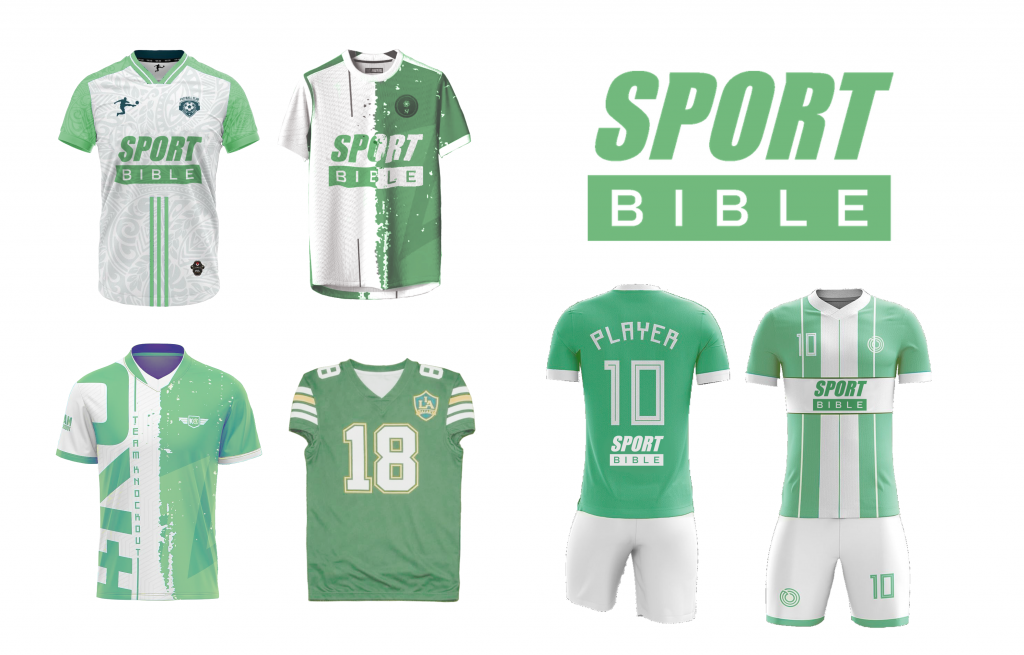
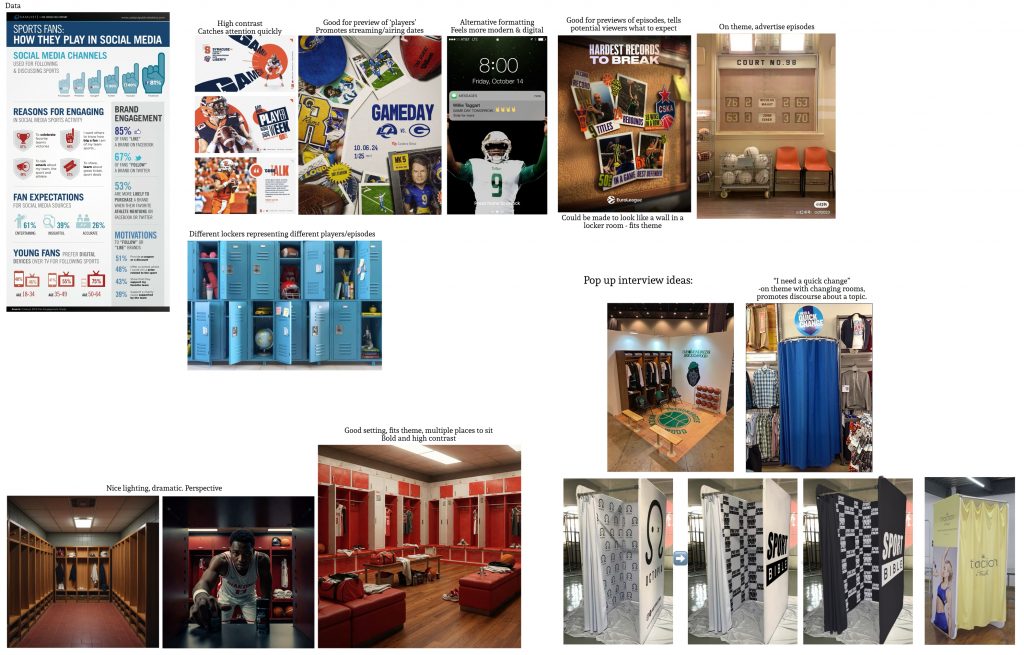
AI concepts:
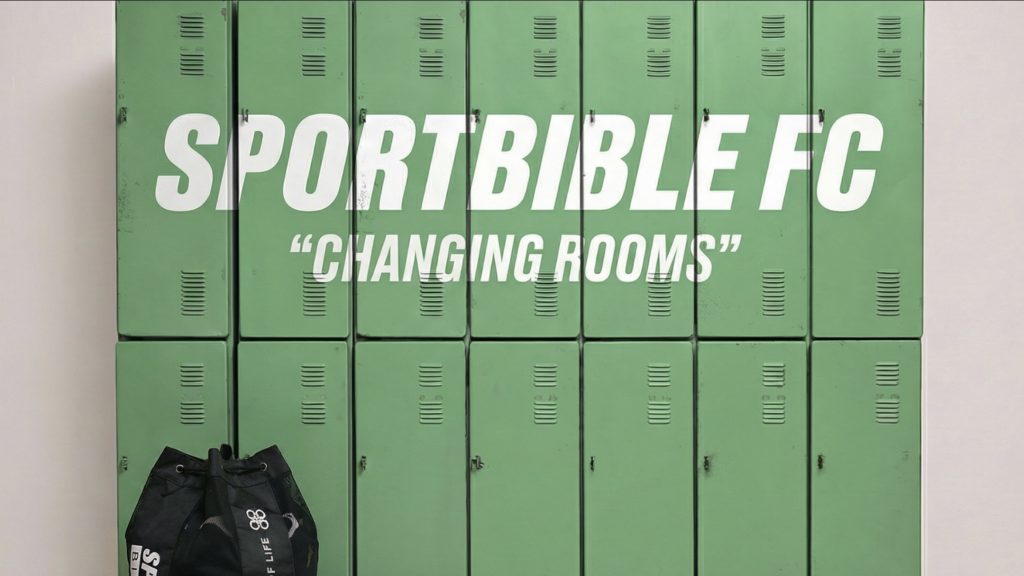
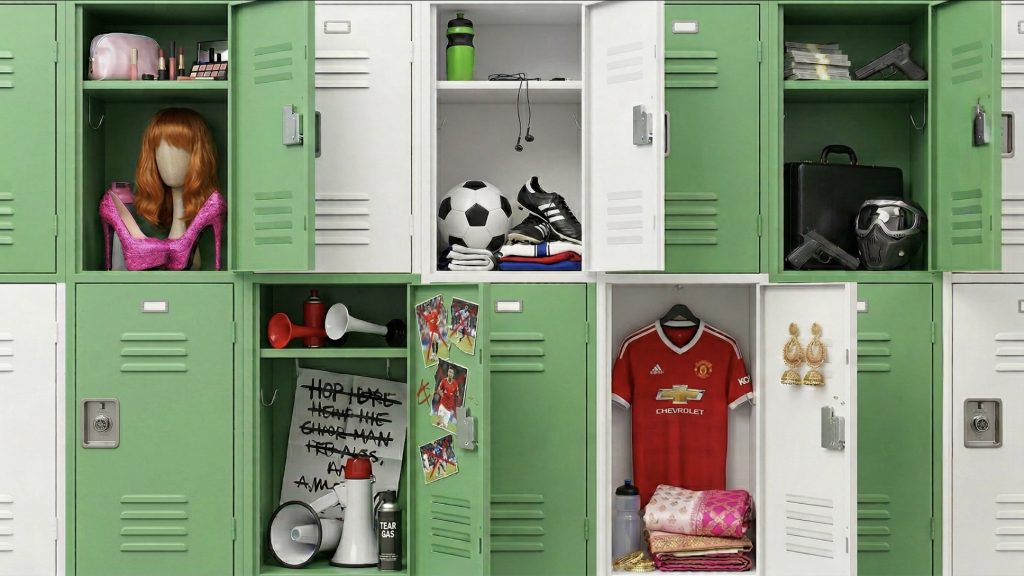
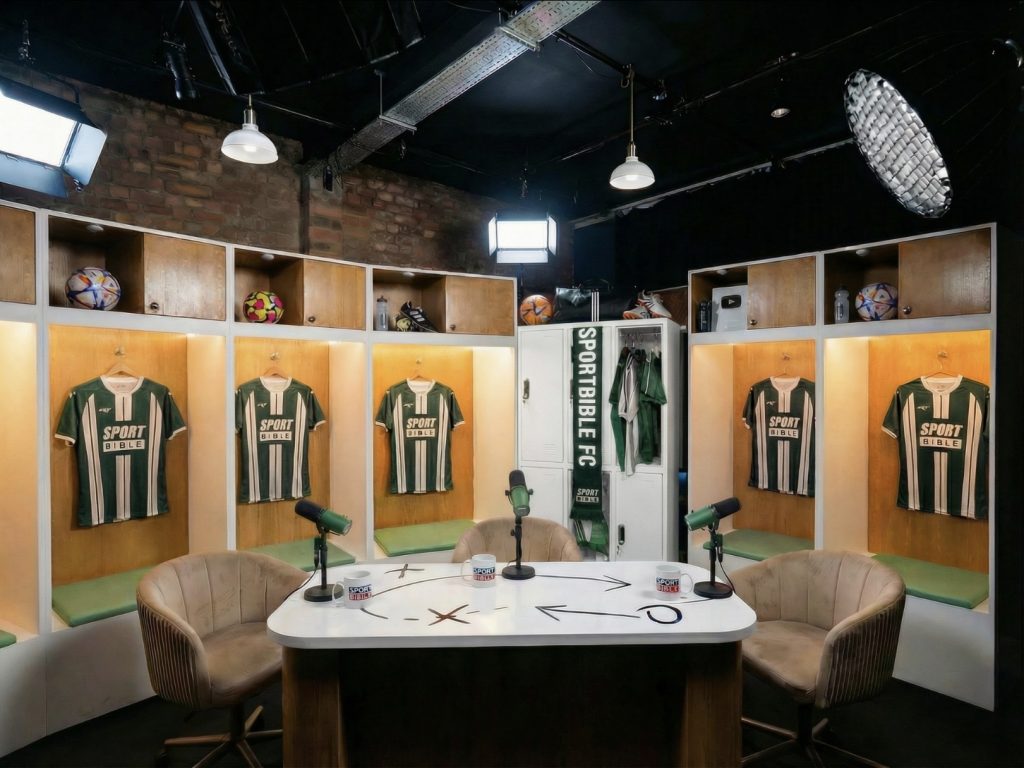
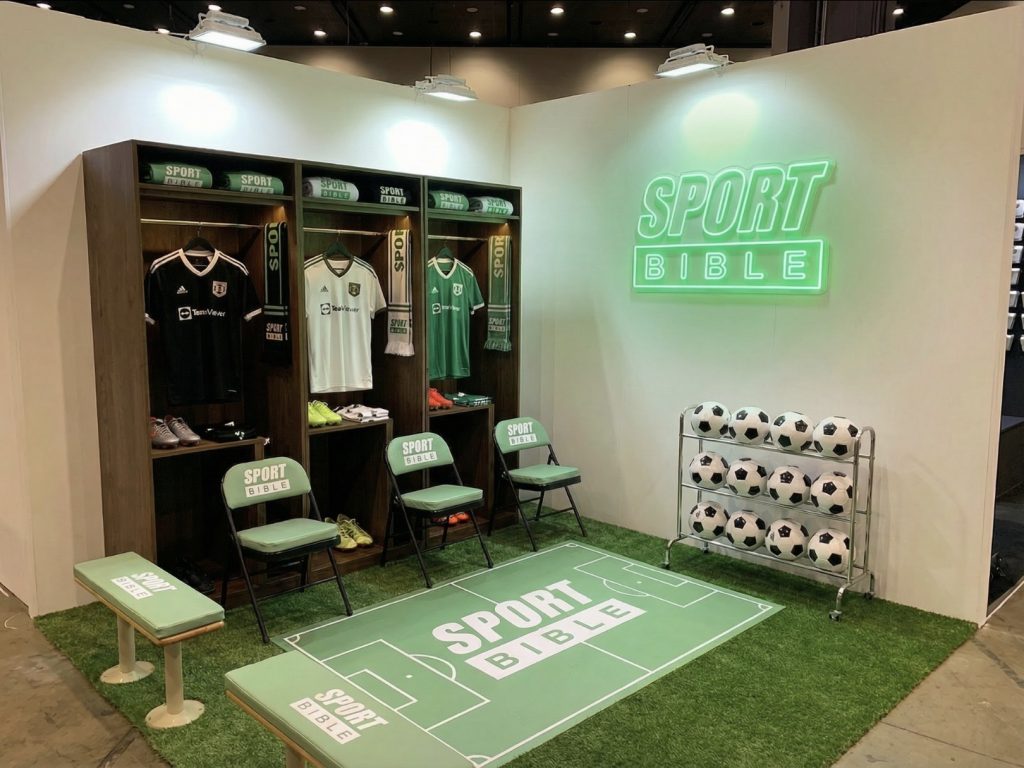
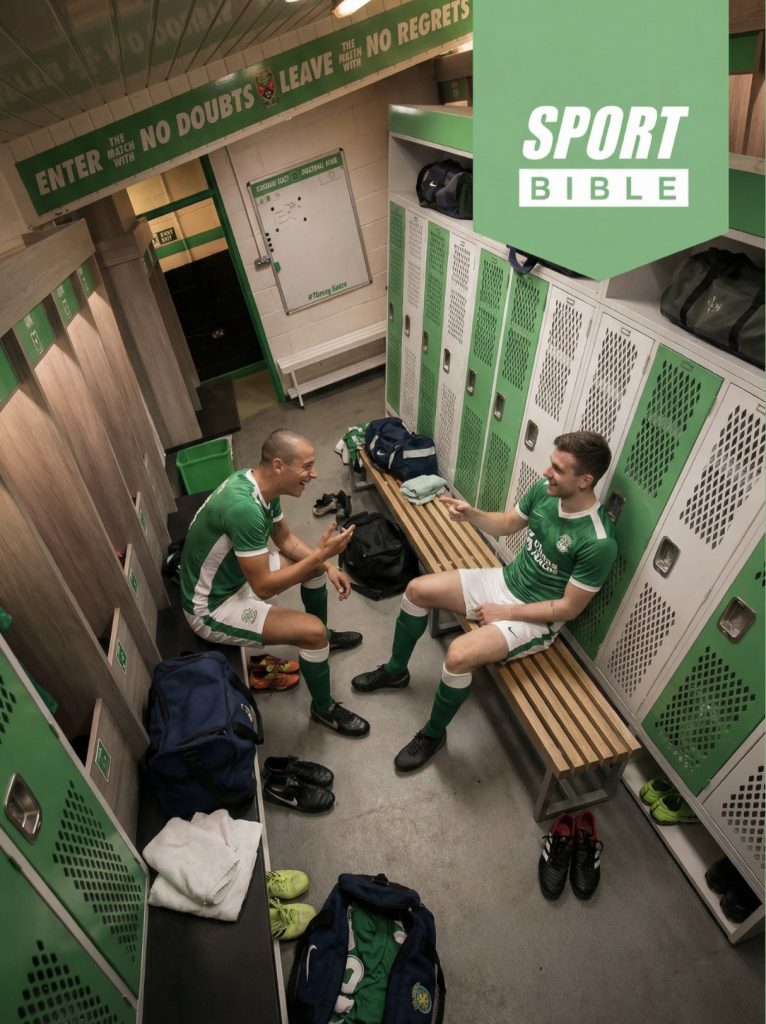
These images made me uncomfortable as I am very against the use of generative AI in creative spaces. Throughout the brief, the use of AI was also encouraged by one of our UAL mentors, which disappointed me. This experience gave me insight into what it felt like working in a company where AI is being implemented. While I didn’t like this usage, these visualisations ultimately helped to deliver the idea of our campaign. I used this as an opportunity to try and be open minded and understand how their AI could be used to assist in developing ideas further, especially in the mock up stage for campaigns and not the final product.
Original images vs AI image comparisons
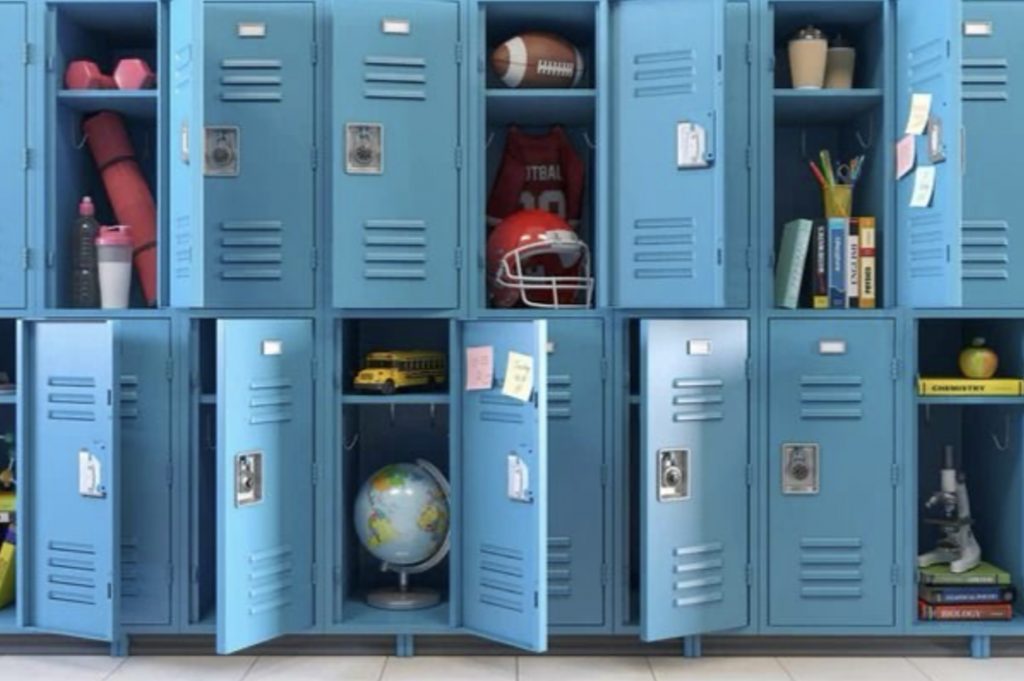
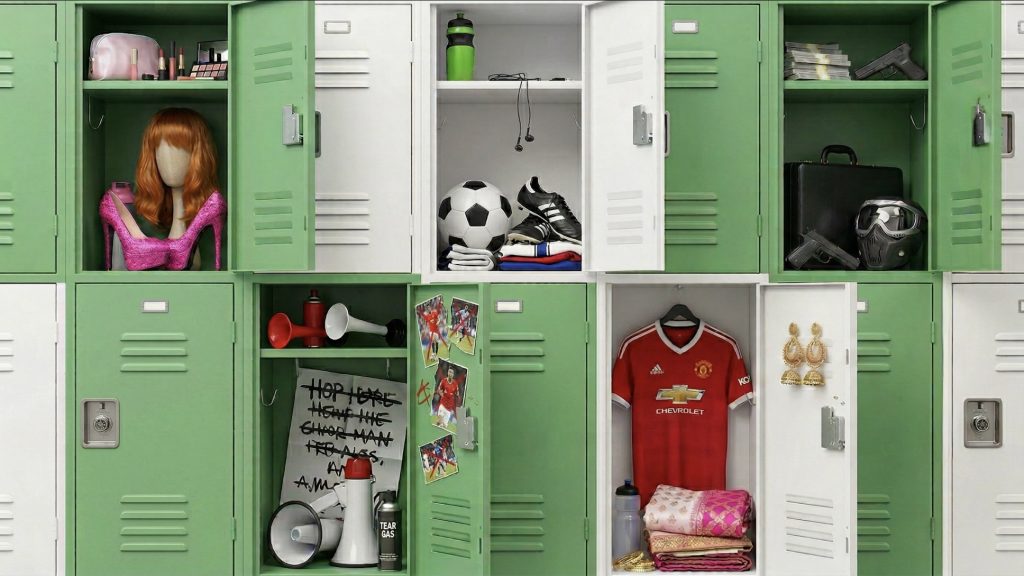
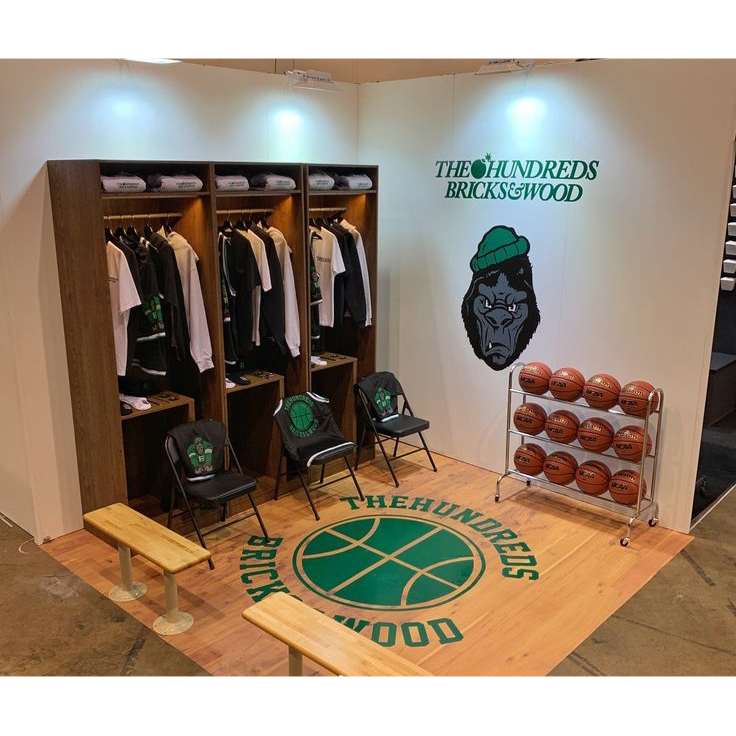
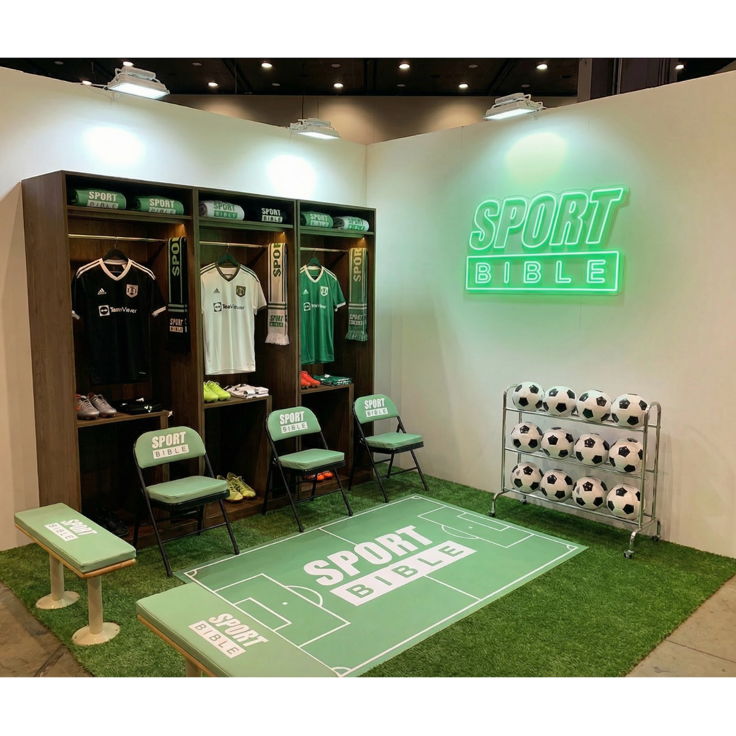
While I understand the value in AI if it can help to quickly transform images to suit your needs, I think it is important to note that these can still be done by human hands, without the use of AI. My teammate spoke about how long it took her to get just a single image right, sometimes spending over an hour. Based on this I feel it could be just as easy, if not more, to create these images if you have knowledge of programmes like Photoshop as you can make changes directly without hoping the AI gets it right after 20 tries.
I watched a video brilliant on this where 1 graphic designer and 2 AI users followed the same brief then compared their results.
https://youtube.com/watch?v=OWfbYfwCyH8&si=6md7rUoJwAdUIVI9
Based on previous feedback from Tim, we created a script to follow. The week before our final pitching, as a team we decided to meet up at LCC to go over our script together and organise who would be delivering which slides. This also allowed us to make last minute adjustments to the contents of the slides if we wanted to move things around. This meeting was valuable as it helped me to feel more prepared. I liked doing it in person as it’s easier to communicate compared to being online where you may accidentally speak over people or have a bad internet connection.
In this session we also discussed ways to make our presentation more cohesive and memorable. Our teammate Mable offered to make cue cards for everyone as well as customised stickers with our campaign logo on. We worked towards finalising the script by a certain date to give her time to create these things.
Script
ADD SLIDE TRANSITION NOTES
Loose Commentary for slides
Slide 1 :
Intro to us each, go left to right, and ask them about their earliest sporting memory, what made them not ignore it, mention intro title
PERSIA:
Sport has always had changing rooms, places where teams regroup and prepare for what comes next.
It’s where the performance stops for a moment and players have the cold, honest conversations that turn the games around.
Society works the same way. Throughout history, change has only happened when someone was willing to speak the uncomfortable truth, the kind usually kept behind closed doors, the kind that NEEDS conversation So why, in sport, are those truths still so often silenced? What if we became the first to stop walking past the door? What if we put our ear against that door ? The changing rooms or… the room for change. What if we took those conversations and platformed them? Exposing the naked truth.
What if SPORTbible became the team captain of that change?”
Slide 2 : BEN:
whoever’s secondary leads into our concept with a Segway something along the lines of, “our concept intends to shrink this gap”
Slide 3 : BEN: opens up
Annas says stat 1
Mabel says stat 2
Amy says stat 3
Persia says stat 4
PERSIA: closes her stat with – especially when they have something to say post the match
Slide 4: video
Slide 5 | Mabel and Amy : Changing Rooms by Sport Bible FC
Mabel:
Changing rooms is a concept based around open conversation.
In the setting where pre-game talks, mid-game talks and other important but overlooked chats happen, we’ll tackle topics that need change in sport.
Featuring big names in sport and British culture as well as the everyday fan, we see important conversations happen in the SportsBible changing room.
Put together, the people having these conversations create SportsBible FC.
Each new person we bring into these conversations is signed onto Sports Bible FC:
Sports Bible For Change.
BEN: With each episode, a social post will go out announcing the signing to Sports Bible FC.
AMY:
Our idea stemmed from pride and the world cup overlapping so we knew from the start we wanted to touch on the wider cultural, social and structural issues facing sport today, to toxic masculinity, racism LGBTQ+ and all things in-between.
These are important issues,
So, our goal is to give sportbible a platform to have these closed door conversations in the open.
Slide 6: ANNA
Changing Rooms is familiar to YOUR viewer
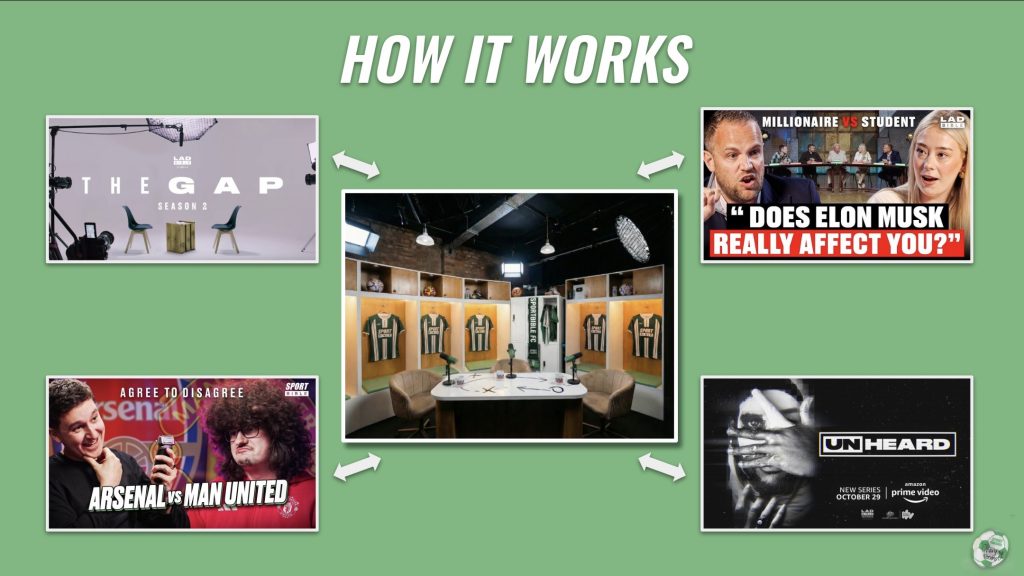
Our concept incorporates elements of what you already do and have done best and brings it together
Taking inspiration from …
Agree to Disagree
The Gap
The Jury Room
Unheard – the strength this series gave to the under amplified voices of victims of racial injustice in Australia and how it approached the topic at a more nuanced and honest angle, inspired what sits at the core of our concept. The results that the one video and one article every week gave this series,
amassing an audience of 100M, content registering 5.2M Instagram likes and 170k comments and almost 1 million viewers signing petitions or supporting activist partners.
Presents to you what our concept can reach and go beyond as time moves beyond the World Cup, Changing Rooms episodical construct keeps Sportbible and rightful matters continually at the top of the table.
Slide 7: BEN
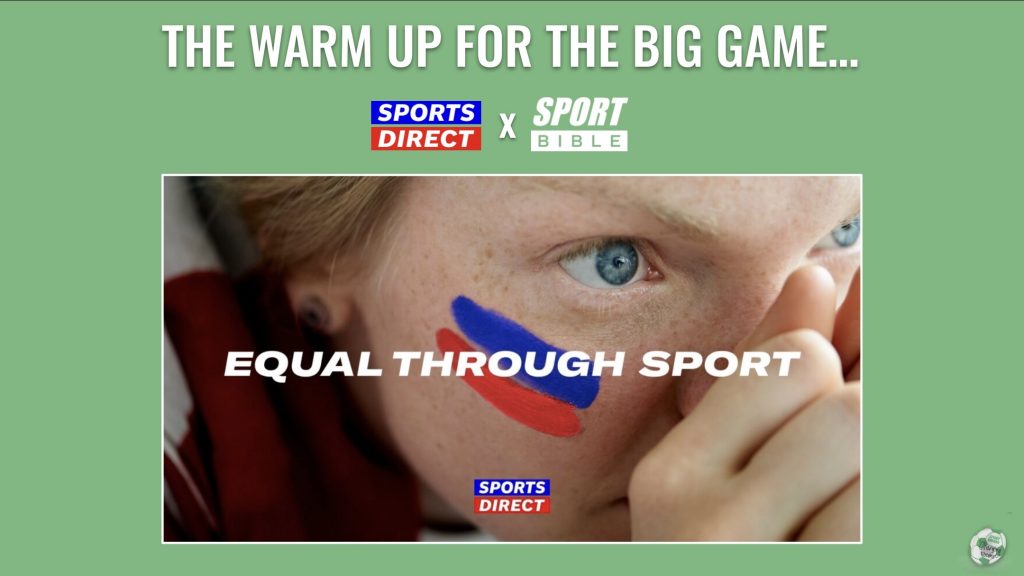
As we all know though, no big game can be played without a warm up, or in this case, no series can be kicked off without a good activation
In the warm up for the big game, we propose that you collaborate with Sports Direct.
Why? Because it had a great rebrand by v3 which our mentor Tim had a role within, not completely, but because it is widely considered the UK’s largest sports retailer by revenue and market presence
- there new initiative ‘equal through sport’ aligns perfectly with our intended direction for changing rooms
- And that many of our generation, your core audience, recall there earliest sporting memories from there.
Slide 8: BEN
Imagine this, a model sportbible changing room in both of its flagships in Manchester and London where shoppers and fans can share their funniest, craziest and most inspiring moments from changing rooms they’ve been in
In extension to this, we suggest sportbible takes to the streets with sports direct in aid of the street olympics where individuals are given a short sharp sporting challenge, as well as completing Vox pops where members of the public are asked questions on what matters to them most about sports to what is concerning them most in the sporting sphere as what good activation exists without a Vox pop
Slide 9: MABEL:
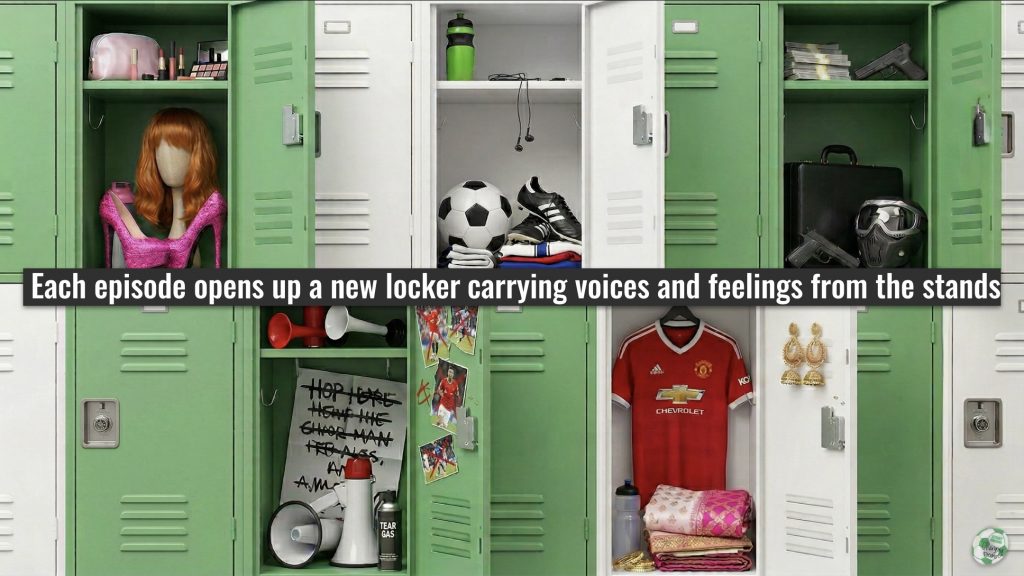
the work completed out and about on the streets and in the stores feeds back into the studio where each episode opens a new locker
- Each locker/episode gets detailed:
Slide 10:
AMY:
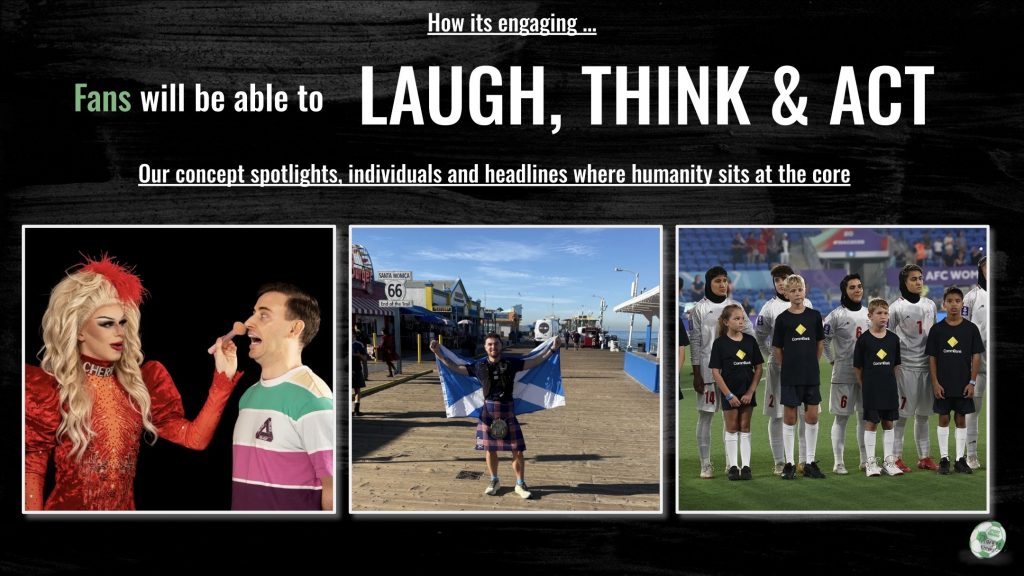
As much as we want to touch on serious topics we still want fans to be able to laugh, and what better way to talk about what’s dragging sports back, than through drag?
We propose an open, and honest conversation between members of the drag and lgbt community, inspired by a segment between Scottish footballer Zander Murray and drag queen Cherry West, both members of the lgbt community. Where through drag they discussed their complicated relationship with both sports and their community, in a playful way.
BEN: general ideas
PERSIA: WHAT THE MENS GAME CAN LEARN FROM THE WOMENS.From the lionesses incredible performances all the way to the Iranian football team refusing to sing their national anthem in an act of protest, women are. making more statements in sport.
Slide 11 : PERSIA
Impact
Ben: Outro
It’s the first chapter of many
the first signing to Sport Bible F.C, Sport Bible For Change, it’s your opportunity to contribute to a brighter future across the landscape of sport.
BUSINESS IMPACT: Changing rooms positions SPORTBIBLE not just as a platform that shares sport but rather it shapes the conversation around it, becoming impossible to ignore.
Because of the plenty room for change in sport, YOU can become a front runner in lifting the cloak on what’s dragging sport back for its wide community
The question we leave you with is, are you ready to put pen to paper and sign the contract…
———————————END OF SCRIPT———————————
The day of the final pitching we met up early in a cafe to run over the script and do a quick practice, Mabel gave us the cue cards here and I was impressed by the quality of them. This quick practice helped to put my mind at ease but also perpetuated my nerves a little as I just wanted to get it over with.

During the final pitch, I found the cue cards very useful as they laid out everybody’s lines so it was easier to keep track compared to when I was using my phone for notes the previous weeks. While talking I tried to maintain eye contact with the client, only occasionally glancing down to check notes. While doing this I became more confident as I adapted and feel it helped to give weight to what I was saying.
Our final presentation:
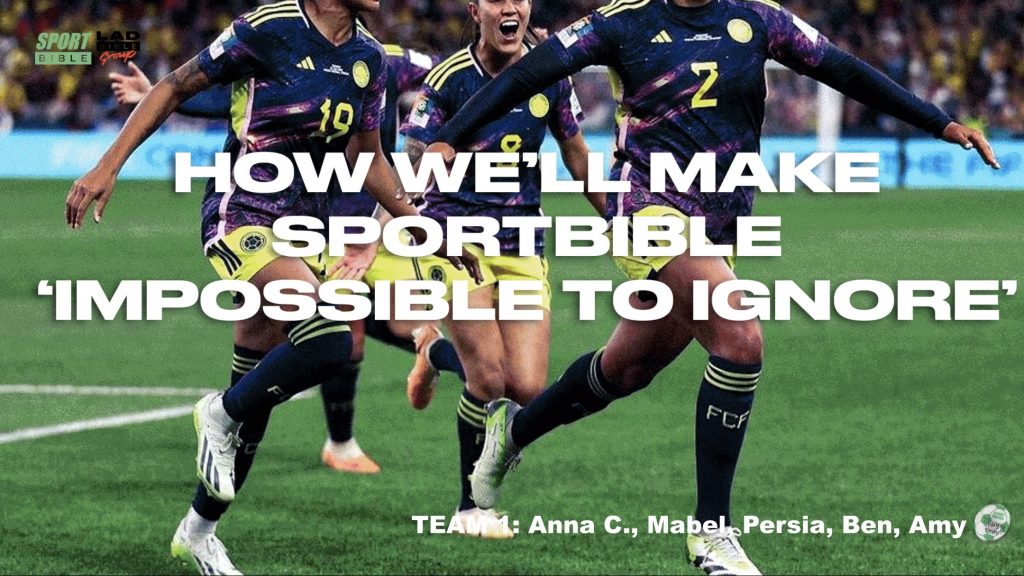
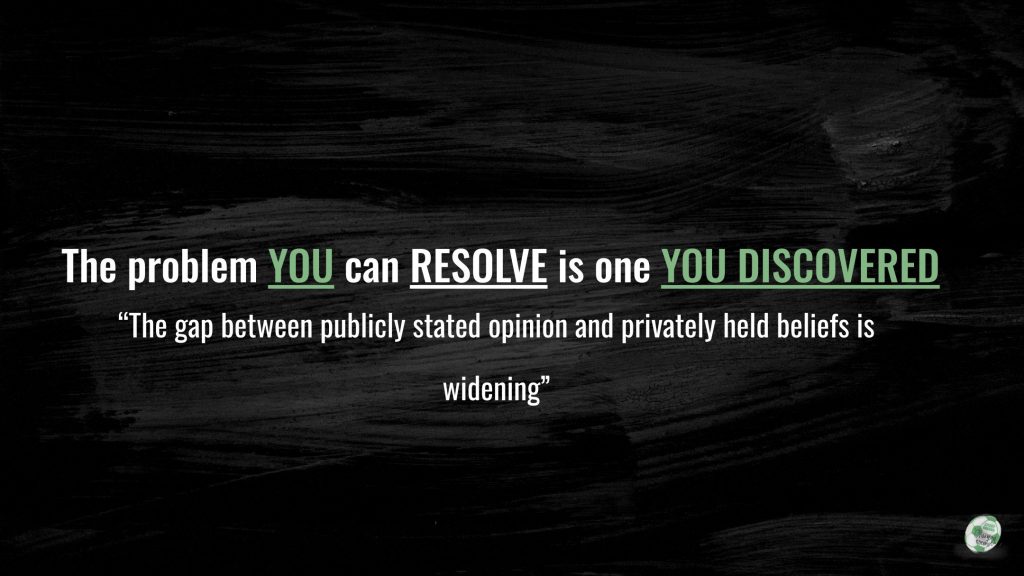
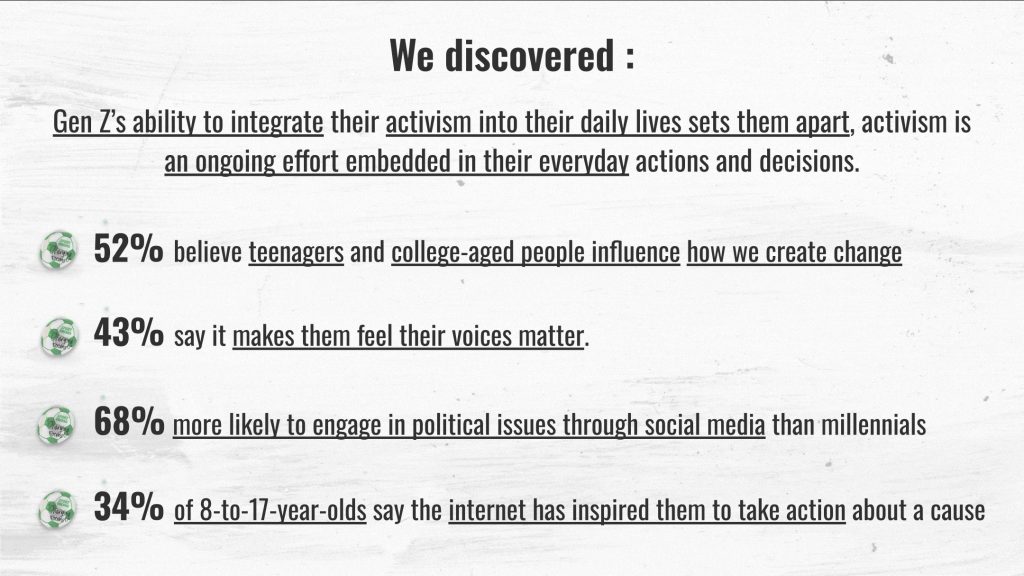

Ultimately our campaign did not end up being chosen by the client. While this was disappointing, I still feel proud of our work and progress nonetheless. While we were not chosen by the client, we were chosen by a lot of our peers, who had anticipated us to win, with someone from the winning team even exclaiming later on that he wished he had worked with us on our campaign instead. Despite ‘losing’ it was clear we had still managed to create a compelling campaign. What stood out to me the most was how passionate someone else from one of the other teams was for our campaign. After we had presented and sat back down, she, and one of her teammates, immediately exclaimed to us how much they liked our presentation. When awaiting the results she was very passionate about continuing this conversation which touched each of our hearts. She mentioned herself not being a sports person but feeling excited and passionate about it upon watching us present. This was a big success for us as it showed us the impact we had on people! Overall I couldn’t help but feel that we won the people’s choice awards, and while we lost the battle we had won the war.
Reflection, week 11
This was a fantastic opportunity that helped to open my eyes to other career options. Having studied art at UAL for the past 3 years in both foundation and undergraduate I didn’t consider any other pathways. Despite lacking in experience in marketing before this brief, I enjoyed it a lot, especially the ideas generation and research parts. While I found pitching difficult I feel I gained important skills by doing it which will help to prepare me for the future. Working in a team made the brief more approachable as I was able to rely on them to help share the workload and to bounce ideas of each other.
This brief pushed me out of my comfort zone and forced me to confront the necessary discomfort in order to strengthen my skills. I was able to adapt throughout the brief and intend to keep an eye out for future creative shift opportunities.

