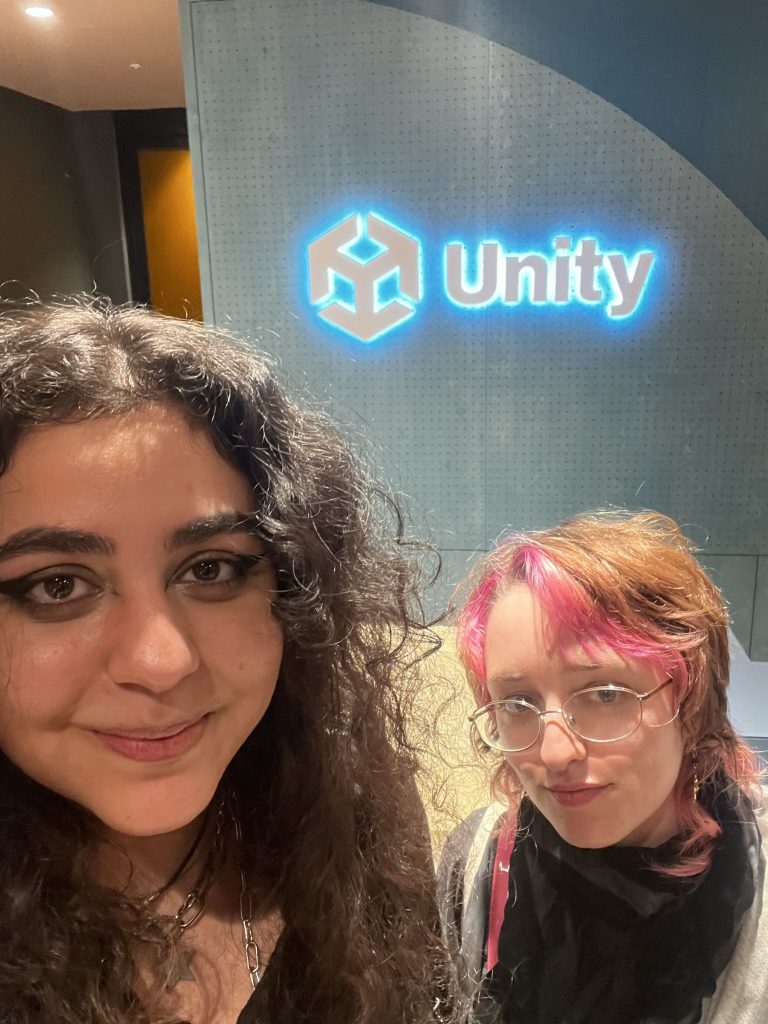

As Games Art students we were offered the opportunity to go to Brighton to attend a series of talks at the Unity hub. These covered different parts of the game making pipeline as well as careers and employability related information.
As I am not a games developer or designer I was not sure how relevant the talks would be to me but they were presented in an easy to understand way such as ‘what can cooking teach us about coding’ where the experimentation process was explained.
One thing that stood out to me is how they spoke about game jams as killing creativity as they are “not about the process but the goal”. They went on to explain that often times when there is no prize it’s more about the passion. I found this perspective interesting as I hadn’t thought about it that way before.
Overall all the talks were very informative and interesting, especially having the opportunity to have my questions answered.
Question: Is there any bad advice about getting into the games industry that you’ve heard? In comparison, what’s some of the best?
Best advice:
- Stay curiosity driven.
- Delight in the glitch. When things go wrong it’s when the fun stuff usually comes out. -> example: when he put the wrong script on an object which made it that it would shoot you in the other direction when placed under your leg.
- Don’t wait for things to be perfect before you put them out there.
- Don’t be sorry, be better. (Just focus on improving if you do something wrong).
- Perfect I’d the enemy of the good. Getting something done is better than getting nothing done at all.
- Be curious, if you’re interested in one part of the process, that will draw people to you.
Worst advice:
- Feeling like you need to know every step of the way to make something. Team up with people instead.
- Following advice that doesn’t belong to you. Know when to throw advice away.

Un-formatted notes I took during the event
Jon von Neumann
Jobsworth weekly
EOS (where everything is valuable)
Game jams with prizes: can kill creativity and partnership. Not about the process but the goal.
No prize: more about the passion.
My question: Is there any bad advice about getting into the games industry that you’ve heard? In comparison, what’s some of the best?
Feedback-
Best advice:
Stay curiosity driven
Delight in the glitch, when things go wrong, it’s when the fun stuff usually comes out. (Out wrong script on object, made it that it would shoot u in the other direction when out under your leg.
Don’t wait for things to be perfect before you put them out there
Don’t be sorry, be better. (Just focus on improving)
Perfect is the enemy of the good (getting something done is better than getting nothing done at all.)
Worst advice:
Feeling like you need to know every step of the way to make something, team up with people instead.
Advice that doesn’t apply to you. (Know when to throw advice away)
Professional advice isn’t always applicable to games (assuming it will be super formal and hierarchical), do not stress, it’s no where near as scary as you think it is.
to form connections that are still valuable now.
-Be nice and be good
-Aim is to have repeat work.
-Industry is so tiny so be likeable.
-Say what you don’t know if they ask you. Let them know you can give it a shot but don’t actually know, haven’t done it before. Be honest.
-be curious, if you’re interested in 1 part of the process, that will draw people to you.
1729
Unity.com/careers
4 principles
-lead with empathy and respect
–
CVs
Structure:
Less is more, recruiter can usually decide in the first 6-7 seconds
Hobbies and interests not required
Summary: recent experience, and top skills that are relevant to what u r looking for
Showcase key achievements
Talk abt current goal is, looking for…
Experience:
Keep clear and searchable
Stick to standard job titles
LinkedIn-
Headline: 2-5 keywords to describe skills and key goals
If in active education, feature that.
Featured:
Portfolio links, standout projects, presentations, cv, general cover letter
About:
Experience:
Cover letter-
Portfolio-
-Brief summary of project
-samples of work
-discuss your approach and thought process
-tools
-results
-improvements you wish you could make for future projects
Interview prep:
-adaptability and problem solving skills
-to a certain degree skills can be taught, if any skill gaps explain how you’re eager to learn and link to relevant experience. Be HONEST
-prepare questions beforehand
-be in an environment u feel comfortable
Technical tasks:
Technical interview, active conversation where you solve problems and explain concepts or discuss past technical experience
ALWAYS FOLLOW UP W UR RECRUITER.
Give it a day or so after interview.
On cv, never claim you are an “expert”
Taking the initiative, why is this being asked of me, what might be needed next, could it be done better, who do I know who might also be doing this sort of thing?